Events
Green Trade Promotion – From Slogan to a New Infrastructure for Viet Nam’s Exports
In a context where global trade is being “re-defined” around green standards, low emissions and sustainable development, trade promotion is no longer simply about supporting sales or organizing trade fairs. For Viet Nam, green trade promotion is gradually becoming part of the “soft infrastructure” of a long-term export strategy, closely linked to the capacity to meet new technical barriers, build a national brand and deliver on the Net Zero 2050 commitment.
The report “Trade Promotion in the 2021–2025 Period and Strategic Orientations and Plans for 2026–2030”, drafted by the Viet Nam Trade Promotion Agency (VIETRADE – Ministry of Industry and Trade), clearly points out the shift in global trade: competition is moving from a focus on price and quality toward increasingly intense competition on carbon footprint, traceability, environmental standards and social responsibility. New mechanisms and regulations by the European Union, Japan and the Republic of Korea are not only changing how imports are handled, but in fact are “redefining” the conditions for participating in supply chains.
The EU’s Carbon Border Adjustment Mechanism (CBAM), scheduled to be fully implemented from 2026, requires exporters into the bloc to declare and pay a carbon charge on a range of carbon-intensive industrial products. At the same time, the EU’s Regulation on deforestation-free products (EUDR) creates a new barrier for commodities such as agricultural products, coffee and timber if their legal and sustainable origin cannot be proven. Japan and the Republic of Korea have both announced their 2050 carbon neutrality roadmaps, accompanied by strict requirements on green labelling, emissions reporting and circular supply-chain management. In this context, “greening production” and “green trade promotion” are no longer voluntary options, but have become prerequisites for maintaining competitiveness and market access.
From Changing the Approach to Rebuilding the Trade Promotion System
In Viet Nam, the Ministry of Industry and Trade has identified green trade promotion as a priority orientation for the coming period, not only in terms of content but also in the way it is organized. According to Dr. Truong Thi Chi Binh from the Institute of Industry and Trade Strategy and Policy Research, the goal for 2026–2030 is to build a modern trade promotion system that can adapt to green transition and digital transformation, aiming at professionalism and deep integration instead of dispersion and fragmentation as before.
This orientation is reflected on three levels.
First, in terms of policy instruments, national trade promotion programmes will clearly embed sustainability criteria: prioritizing budget for green products, enterprises with emission-reduction strategies, and projects applying international standards on environment, biodiversity and social responsibility.
Second, in terms of technical infrastructure, support for businesses to develop traceability systems, implement green logistics, switch to recyclable packaging and design labels that meet international benchmarks is seen as a mandatory component rather than “optional extra”.
Third, in terms of human capacity, training and awareness-raising will be organized in a more structured way through an annual Green Export Forum, training courses on CBAM and EUDR, and programmes on international standards for sustainable supply chains.
A concrete signal that this reorientation is not just “on paper” is the series of recent training programmes run by VIETRADE. The capacity-building programme on green export development has been launched to help agencies, organizations and enterprises keep up-to-date with the EU’s new regulations, especially CBAM and EUDR, so they can draw up plans, measures and roadmaps to adjust export-oriented production and maintain markets under the new conditions. At the same time, the process of developing the trade promotion report for 2021–2025 and orientations for 2026–2030 has been designed as an open consultation process involving experts, business associations and enterprises, to ensure that the next five-year programme is not only “good on paper” but feasible in terms of resources and aligned with international market trends.
Enterprises Greening Production: From Isolated Bright Spots to an Inevitable Trend
At enterprise level, pioneering models are emerging which show a direct link between green transition, green promotion and the ability to move up to higher-value segments of the market.
Colusa–Miliket Food Joint Stock Company is one such example. The firm has embedded the goal of greening into its entire production chain, from raw material selection to technology and packaging. Today, about 80% of its product portfolio falls into the “green” category: noodle packaging has been shifted to eco-friendly paper; the production process uses plasma technology for sour-smell removal and disinfection, ensuring food safety and improving sensory quality. Importantly, these moves not only help the company meet the criteria of demanding markets, but also provide a convincing “story” in trade promotion activities, fairs and business-matching sessions with international buyers.
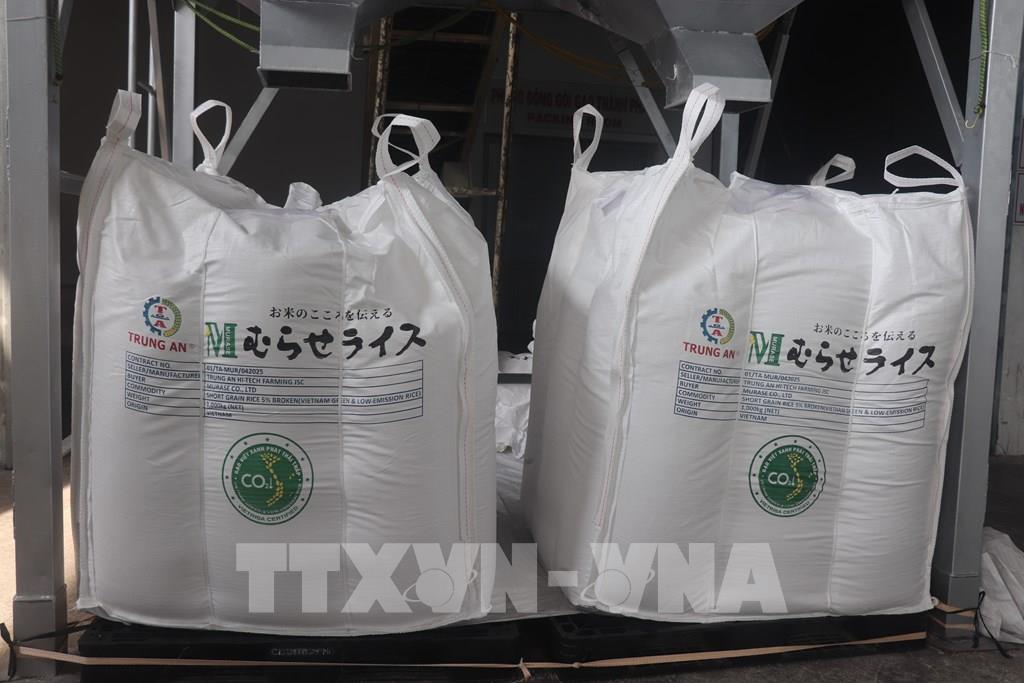
At Vien Phu Trading and Production One-Member Co., Ltd., the chosen path is an “organic-based” agricultural model aligned with high standards. The company has invested in hundreds of hectares of organic rice certified to USDA standards, developing a chain of organic products such as rice, noodles, pho and rice paper. By combining production model transformation with a well-designed promotion strategy, these products have reached thousands of domestic retail outlets and been exported to Europe, North America and Japan. From a trade-promotion perspective, this is clear proof that when the “green” story is real, promotion tools – from fairs and B2B matching to brand communication – can genuinely create added value.
These typical cases show that green trade promotion only delivers results if it goes hand in hand with real, substantive transformation at enterprise level. If products and processes remain “brown” while only the label is painted “green”, trade promotion itself will quickly lose credibility under the increasingly strict scrutiny of importers.
Green Trade Promotion: Micro-Level Benefits for Firms, Macro-Level Gains for the Economy
Dr. Truong Thi Chi Binh emphasizes that green trade promotion generates dual benefits. At firm level, it is a key to accessing higher-value market segments, concessional finance and clean technologies, while also driving innovation through the development of environmentally friendly products and services. At the economy-wide level, green promotion contributes to building the image of Viet Nam as a responsible producer and exporter, thereby enhancing national competitiveness and expanding opportunities for international cooperation.
When enterprises are able to meet green standards, they can participate more deeply in global supply chains as long-term partners rather than short-term suppliers. Requirements for emissions reporting, life-cycle assessment and environmental risk management may create initial pressure, but in the long run they function as a filter that enables competitive firms to remain in the game, raising the overall quality baseline of entire sectors. At the same time, a robust ecosystem of green enterprises helps make Viet Nam’s Net Zero by 2050 commitment a reality, aligning export growth with environmental protection and improved quality of life for future generations.
Reshaping Trade Promotion Institutions: From “Going with the Fair” to “National Marketing”
One key point stressed by many experts, international organizations and association representatives is that if green trade promotion is to become a genuine new driver of exports, the trade promotion system itself must become “greener” and more “modern” – from mindset to operating mechanisms.
The representative of SIPPO (Swiss Import Promotion Programme) argues that modern trade promotion must rest on four pillars: sustainability, ecosystem approach, market intelligence and results measurement. In other words, it is no longer enough to measure performance by the number of trade fairs or booths; it must be assessed through indicators such as the share of enterprises that improve their green standards, the number of long-term contracts signed, and the extent to which firms move into higher-value segments of supply chains.
Experts from ITC (International Trade Centre) similarly suggest that trade promotion activities should go beyond the model of “a fair in every place” and instead promote competition, digital transformation and stronger connections between the central and local levels. When market data and information on technical barriers and green standards are shared systematically from the national level to local trade promotion centres, small and medium-sized enterprises have a better chance to access timely information and adjust their strategies.
From an institutional perspective, Mr. Vu Ba Phu, Director General of VIETRADE, believes that Viet Nam should aim for a national trade promotion organization that plays the role of “national marketing agency”, similar to JETRO (Japan) or KOTRA (Republic of Korea), rather than merely “going along with localities to organize small fairs”. This requires not only resources but, more importantly, clear role definition: the national-level agency should focus on researching strategic markets, building the national brand and designing long-term programmes; industry associations and local centres should concentrate on technical support, training and concrete matchmaking for enterprises and cooperatives.
At present, there are still very few professional associations in Viet Nam capable of providing systematic trade-promotion support and helping enterprises meet green standards. Many provincial trade promotion centres remain heavily event-oriented and have not invested adequately in their “knowledge-service” function: surveying enterprise needs, designing training programmes, advising on green and digital transition. If this gap is bridged, it will provide a “soft but durable push” for the new phase of trade promotion.
From Sales Support to a Long-Term Green Integration Strategy
Against the backdrop of global trade volatility, rising protectionism, supply-chain restructuring and ever-higher green requirements, Viet Nam’s trade promotion must shift from a “sales-support” mindset to a “capacity-building for integration” mindset. This means that the national trade promotion programme in the coming period must consistently integrate goals of greening, sustainability, digital transformation and social responsibility.
When the State’s determination to build a green trade promotion programme converges with enterprises’ efforts to green their production, a “synergy effect” will emerge. Green trade promotion will then not only help secure more export orders, but also contribute to elevating Viet Nam’s image as a trustworthy partner, responsible toward the environment and the community. This will form the foundation for Vietnamese goods to go further on the global trade map, while making a tangible contribution to the country’s sustainable development objectives.
Việt Thành