Vietnam’s Food and Spice Industry: When “Authentic Quality” Becomes a Global Competitive Strategy
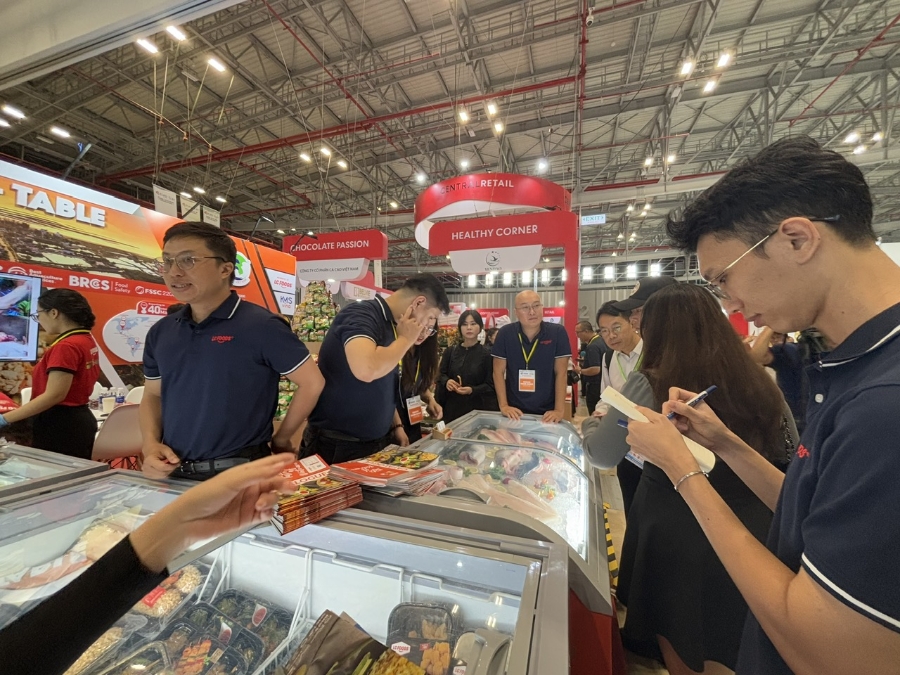
Vietnam’s food and spice industry is entering a new phase, where quality—rather than low cost—has become the core of its competitive strategy. This transformation is evident at the “Viet Nam International Sourcing 2025” (VIS 2025) event organized by the Ministry of Industry and Trade, where buyers from Malaysia, Pakistan, Japan, South Korea, the United States and other markets noted a clear shift among Vietnamese enterprises: proactive standardization, improved traceability, market-specific flavor customization, and a readiness to comply with international certifications that once posed significant barriers.
This shift aligns with broader global restructuring of supply chains, driven by geopolitical changes, tariff adjustments and rising food-safety requirements. Products capable of maintaining consistent quality and transparent production processes are becoming top priorities for international buyers. With inherently rich, distinctive flavors and significant quality improvements in recent years, Vietnam’s food and spice industry is increasingly well-positioned to move up the global value chain.
Authentic flavor: an intangible asset, a tangible advantage
One of the attributes most valued by international buyers is the “authenticity”—the original, uncompromised flavor profile that Vietnamese products naturally possess. According to Janet Phan, CEO of Global FMCG Sourcing LTD, Vietnam’s strongest advantage compared to Thailand or Indonesia is its “rich, distinctive, authentic” taste across categories such as fish sauce, roasted coffee, black pepper or cashew nuts. As global consumption shifts from “mass flavoring” to “authentic flavoring,” prioritizing natural and original tastes, Vietnam is emerging as a market aligned with this trend.
However, authentic flavor only becomes a competitive advantage when enterprises can maintain stable taste and quality across shipments. This requires a rigorous quality-control system—something many small enterprises lacked before. With markets tightening requirements on traceability, pesticide residues and batch consistency, flavor stability is increasingly considered a critical criterion, especially in markets such as Japan, South Korea and the United States.
From domestic operations to global markets: the transition of Vietnamese enterprises
At VIS 2025, the story of Lam Tran Au Tea and Coffee Co., Ltd. exemplifies the broader transformation of the industry. Founded in 1984, the company spent more than four decades serving the domestic market before shifting toward export in the last two years. This transition required not only investment in roasting and processing technology but also the completion of international certifications such as ISO, HACCP, FDA and GACC—mandatory gateways to enter Singapore, the United States, China and the European Union.
The company sources raw materials from reputable regions such as Cau Dat, Bao Loc and Thai Nguyen to ensure consistency and traceability. According to its representatives, applying ISO–HACCP standards enables close monitoring of chemical residues—an increasingly strict requirement in global markets. The company has already exported small volumes to the Philippines, China, Cambodia and Thailand; is present on Alibaba; and has sent samples to the United States and Canada.
In a more complex segment, Tran Van Phu—the founder of B’lao Scavi–Corèle Group—said the company now provides more than 3,000 product items developed in Vietnam for export to Japan, China, Hong Kong, Mauritius, Thailand, Indonesia and Cambodia. He emphasized that the 10-year journey into the Japanese market was not merely about overcoming technical barriers but also about establishing a stable quality-management system. Once a product meets Japanese standards, expansion to other markets becomes more feasible, but it also requires enterprises to maintain absolute batch-to-batch reliability.
3F models, R&D and product innovation: the pathway into demanding markets
For processed foods—where safety, hygiene and traceability standards are most stringent—companies such as LC Foods illustrate a well-structured approach. Its 3F model (Feed – Farm – Food) ensures quality control from raw materials to finished products. Using cornerstone Vietnamese ingredients such as pangasius, basa and rice, the company develops ready-to-eat and ready-to-cook product lines aligned with global consumption trends.
R&D Director Dang Van Lam noted that each market has distinct taste preferences, requiring tailored recipes for Singapore, South Korea and soon the United States and Australia. He also pointed out that certain anti-dumping tariffs imposed by the United States—approximately 20% on relevant Vietnamese products—are significantly lower than those applied to competitors, giving Vietnam a meaningful competitive edge.
International buyers: from surprise to confidence
Reports from VIS 2025 show increasing confidence among international buyers. According to Lisa Lee, Head of Sales & Marketing at LS SND (Malaysia), Vietnamese traditional fish sauce demonstrated “very high, even superior” quality compared to some well-known Thai products. Malaysian consumers, who once favored goods from Europe, the United States or Japan, are now increasingly open to Vietnamese items, especially coffee—one of the most diverse product categories from Vietnam. She believes that with proper market positioning and promotion, Vietnamese fish sauce can successfully penetrate multiple distribution channels in Malaysia.
From Pakistan, Muhammad Haris Agar—Director of Agar International—affirmed Vietnam’s role as the primary supplier of black pepper, with annual imports averaging 40–50 containers and demand remaining strong. Meanwhile, a U.S. importer from Houston shared that Vietnamese samples tested in the U.S. “exceeded expectations” in both quality and packaging, creating favorable conditions for expanded sourcing amid recent tariff adjustments.
From the distribution perspective, Nguyen Thi Bich Van—Communications Director of Central Retail Vietnam—observed that regional demand for Vietnamese agricultural products and spices is rising sharply. Following global tariff fluctuations, many exporters are shifting focus toward Southeast Asia, a market with purchasing power approaching that of Europe and the United States. With more than 90% of Vietnamese agricultural products already integrated into Central Retail’s system for both domestic display and export promotion, the timing is favorable for expanding market reach.
Two competitive pillars: identity and standards
Insights from VIS 2025 highlight two foundational pillars defining Vietnam’s competitiveness. The first is its flavor identity—distinctive, memorable and culturally rooted. The second is standardization, represented by ISO, HACCP, FDA, GACC and 3F management models, which enable enterprises to maintain consistent quality and satisfy stringent import regulations.
The integration of authentic flavor with disciplined quality control has become the “common formula” adopted by leading Vietnamese enterprises. When balanced effectively, this allows Vietnamese products to not only make a strong impression but also become trusted choices in the world’s most competitive markets.
For Vietnam’s flavor to go further
Overall, the fact that Vietnamese products consistently exceed quality expectations is becoming a new “passport” for market expansion. Whether from Malaysia, Pakistan, regional retail systems or U.S. buyers, the common message is trust in Vietnam’s ability to improve quality and meet strict standards. Yet sustaining this momentum requires long-term discipline: maintaining batch consistency, adapting rapidly to evolving international regulations, and building strong brand positioning tailored to each market.
When these elements work together within a cohesive ecosystem, “Vietnamese flavor” will not only be present but will endure, becoming a reliable part of the global retail landscape. This marks a significant shift—from being primarily a supplier of raw materials to becoming a producer of high-quality, globally recognized consumer goods.
Việt Thành