Events
Vietnam’s Wood Industry Faces the EUDR Challenge: A New Barrier or an Opportunity to Elevate the Supply Chain?
Vietnam’s wood industry – one of the country’s export pillars with an annual export value of around USD 15 billion – is entering a new testing phase as the European Union’s Regulation on deforestation-free products (EUDR) will officially take effect on December 30, 2025. This is considered the most stringent barrier the Vietnamese wood industry has ever faced, but it also opens up an opportunity to restructure supply chains toward greater transparency and sustainability.
EUDR: A tangible risk for businesses that are not prepared
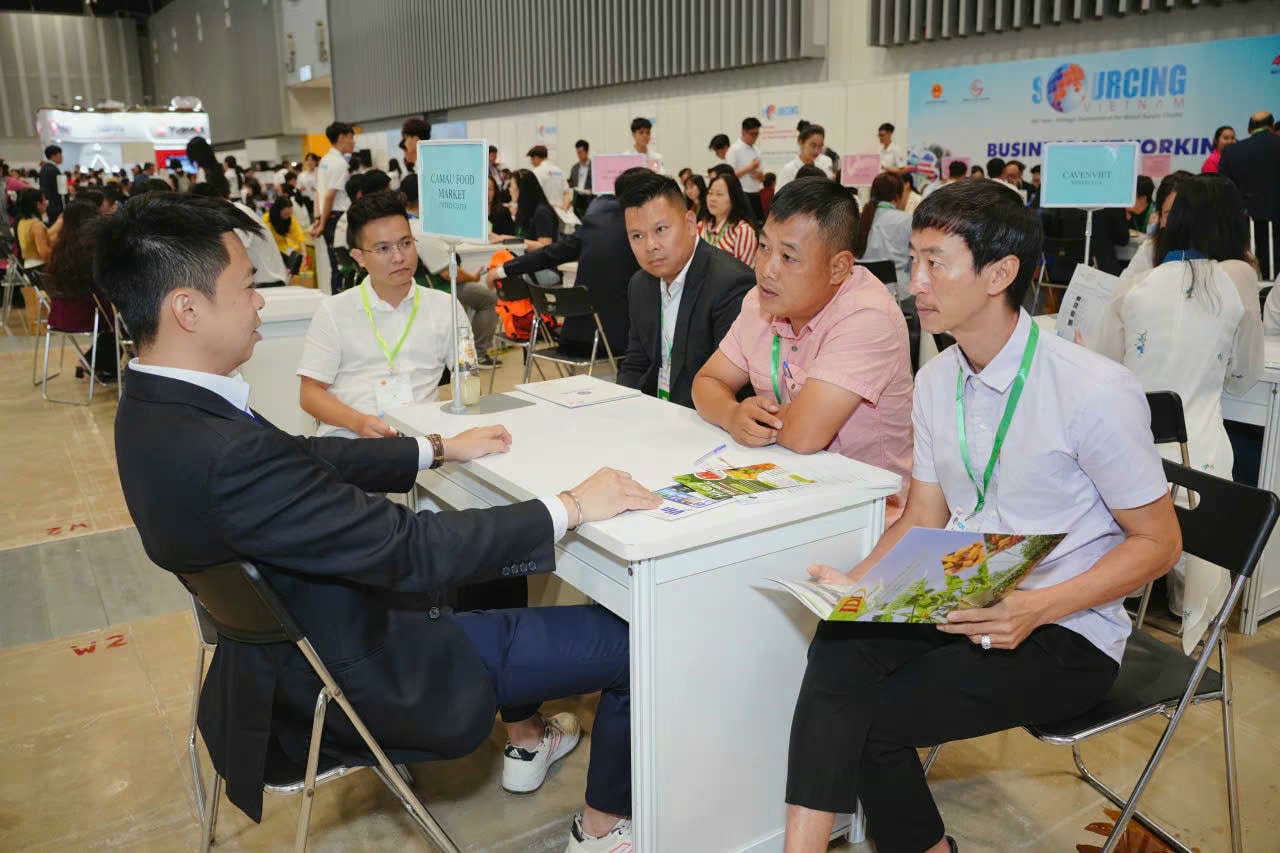
Speaking at the seminar “Market Diversification Strategy: From Risks to Opportunities” held within the framework of Vietnam International Sourcing 2025, Mr. Huỳnh Lê Đại Thắng – Executive Committee Member of HAWA and Director of Nghia Son Furniture Co., Ltd. – said that all wood products exported to the EU from the end of 2025 will be required to ensure traceability and prove that they are not associated with deforestation or forest degradation after December 31, 2020.
If these requirements are not met, goods may be rejected or destroyed by EU customs authorities. This is a significant challenge for the more than 600 member companies of HAWA, and thousands more after the merger of Ho Chi Minh City, Binh Duong and Ba Ria–Vung Tau. More than 90% of these companies are small and medium-sized enterprises – the segment most likely to struggle when facing high international market standards.
Beyond EUDR, to access the EU market, businesses must also comply with the BSCI standards on social responsibility. Mr. Thắng noted that even experienced enterprises must make large investments to upgrade their management systems. With IKEA alone, Vietnam currently has fewer than 10 suppliers that meet the company’s strict requirements, despite high demand from the group. This shows that technical, environmental, and social responsibility requirements are becoming decisive factors in competitiveness.
Changes from the market: Vietnamese businesses need strategic steps
Experts at the seminar said that EUDR not only puts pressure on the wood industry but also rings an alarm bell regarding excessive reliance on traditional markets. Currently, 70% of Vietnam’s export value is concentrated in the US, the EU, China, and South Korea. As these markets tighten trade and environmental barriers, Vietnamese businesses can easily fall into a passive position.
According to Mr. Tạ Hoàng Linh – Director General of the Agency for Foreign Market Development (Ministry of Industry and Trade) – such dependence makes businesses vulnerable to geopolitical fluctuations and protectionist measures. Therefore, market diversification is an urgent requirement. Many regions such as Latin America, the Middle East, Northern Europe, and Canada offer significant growth potential but have not been effectively tapped.
In Latin America, despite enormous import demand, Vietnamese exports currently stand at only about USD 10 billion. A representative of Coppel (Mexico) said that if the logistics “bottleneck” – with current shipping times of up to 6 weeks – can be resolved, exports to the region could increase by 50%.
In the Middle East, Vietnamese goods have been recognized as a strategic supply source due to consistent quality and competitive costs, yet businesses still face risks from geopolitical conflicts and high logistics requirements.
Sustainability – the key for Vietnamese goods to go further
In addition to expanding markets, experts stressed that the only way for Vietnamese goods to overcome increasingly strict technical barriers is through sustainable development.
Mr. Per Ljungblad – Natural Fiber Category Manager of IKEA – said that Vietnamese businesses need to focus on sustainable materials, reducing CO₂ emissions, and enhancing green production capacity. Bamboo, he noted, may become a special advantage for Vietnam in the EU and Nordic markets.
Mr. Huỳnh Lê Đại Thắng added that requirements for traceability, social responsibility, and environmental standards will become “mandatory tickets” for all businesses wishing to export to the EU starting in 2026. Therefore, investment in international standards is no longer optional but a matter of survival.
Optimizing FTAs and direct connections – the way forward
The Ministry of Industry and Trade emphasized that market diversification must go hand in hand with effective utilization of next-generation FTAs, while strengthening direct connections between Vietnamese enterprises and major global distribution systems. This will drive the expansion of Vietnamese goods’ presence and avoid reliance on a few key markets.
According to Mr. Thắng, small businesses can completely start with small steps such as joining international exhibitions, adjusting product designs to meet market-specific preferences, or investing step by step to meet higher standards. “What matters is taking each step according to your capacity to gradually strengthen competitiveness,” he said.
Hữu Hưng