The News
Global Buyers Show Rising Interest in Vietnamese Products — but Still Look for Breakthroughs in Transparency and Quality Consistency
International buyers acknowledge that the quality of Vietnamese products has improved significantly, with many items now considered competitive with regional peers. However, shortcomings in after-sales service, transparency, logistics capability, and consistency across product batches remain notable “red flags” preventing Vietnamese goods from fully unlocking their export potential.
Amid global economic volatility, experts warn that upgrading supply standards and proactively diversifying markets is no longer a strategic option — it is a survival requirement for Vietnamese exporters.
Vietnamese Products Gain Ground in Quality — but Consistency Remains a Challenge
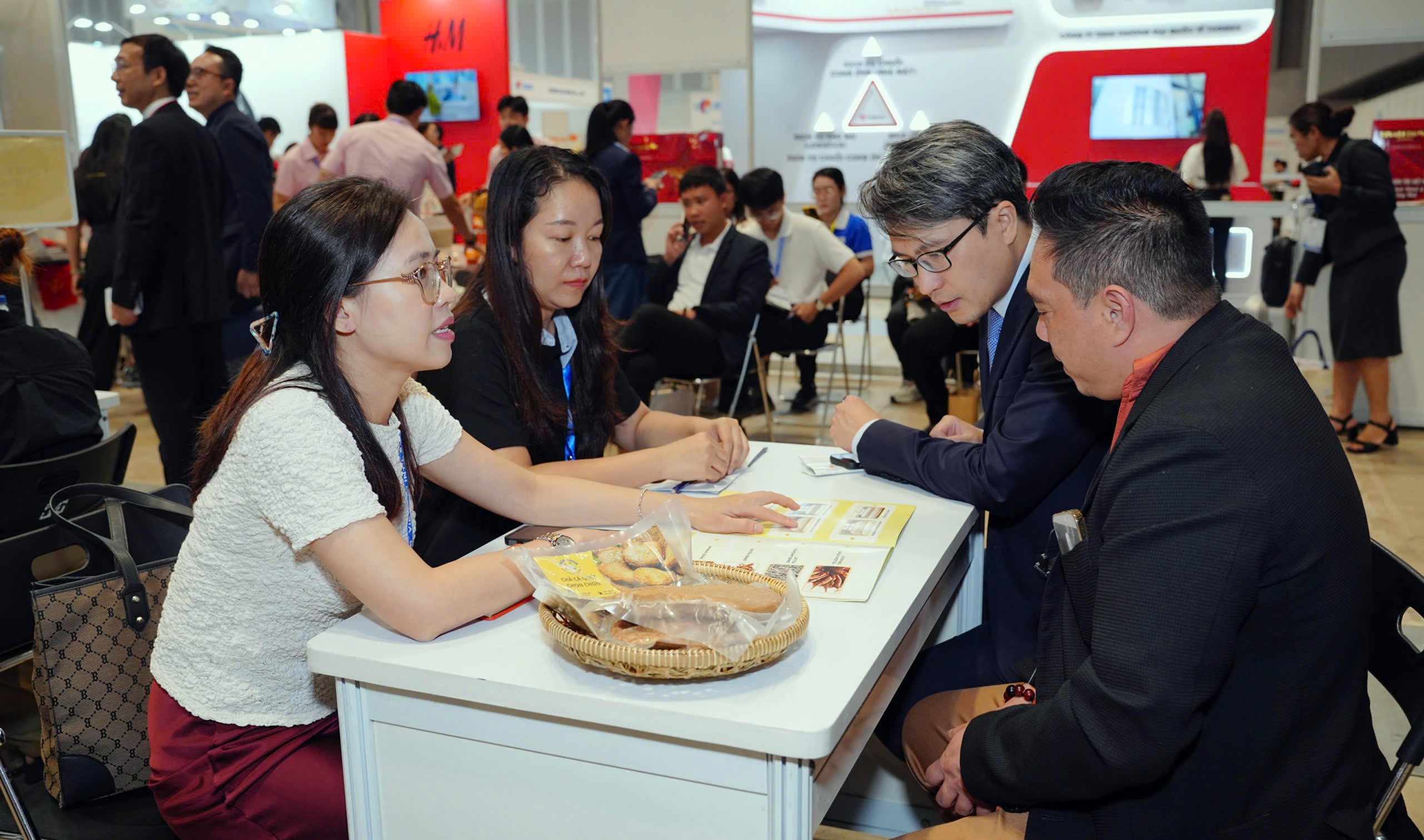
Các doanh nghiệp Việt Nam kết nối trực tiếp với đoàn thu mua quốc tế - Ảnh: VIS
On the sidelines of the Vietnam International Sourcing 2025 Exhibition (VIS 2025) held in Ho Chi Minh City from September 4 to 6, numerous international buyers praised Vietnamese firms for making substantial strides in product quality.
Dionathan Santos, President of the Vietnam–Brazil Chamber of Trade and Industry, said Brazilian consumers are now familiar with Vietnamese products, especially agricultural goods and industrial inputs. According to him, Vietnam can compete with Indonesia or Thailand in both quality and price, while its young workforce is often more skilled and flexible than in some neighboring countries, such as Cambodia or the Philippines.
“Brazil does not see Vietnam as a replacement for China, but as a complementary source to help address existing challenges with China. Therefore, price and quality are the two fundamental elements in any negotiation,” he emphasized.
However, Mr. Santos pointed out two critical weaknesses: suboptimal logistics and insufficiently open business communication, which create concerns around transparency and reliability in long-term cooperation. Compared with China, Vietnamese suppliers still struggle with shipping speed and cost performance, especially for large-volume orders.
From the UK market, Mr. Habib Jan of KAK Private Limited said his company plans to import 100 containers of food and beverages from Vietnam next year. He noted clear advantages in price and quality, but stressed that transparency and proper certification are prerequisites for entering a highly demanding market like the United Kingdom.
Stable and competitive pricing matters to global retail chains, he added — but long-term partnerships hinge on consistent quality across shipments.
Sharing insights from Mexico’s Coppel Group, buyer representative Heidi Tran said many Vietnamese factories produce “excellent-quality goods,” yet international buyers remain cautious due to inconsistencies between batches. “These issues heavily influence buyer confidence, particularly for large distribution partners,” she warned.
She added that workflows in many factories are still rigid. While each manufacturer has internal protocols, global retailers also operate under strict cooperation frameworks — and inflexibility on either side can hinder long-term relationships.
Middle East, Latin America, Northern Europe: Strong Demand but Vietnamese Suppliers Not Always Ready
Beyond the Americas and Europe, Vietnamese goods continue gaining traction in the Middle East. Mr. Fasuludeen, representing a Japanese-run food distribution company in the UAE, praised Vietnamese fragrant rice and noted rapid improvements in Vietnamese product quality.
However, he said many Vietnamese suppliers struggle with basic engagement: communication barriers and weak after-sales processes often disrupt cooperation before it begins.
“We have had negative experiences related to transparency, sustainability verification, and product stability. But Vietnamese companies are improving — that’s why we’ve returned to the Vietnamese market,” he said.
In e-commerce, Mr. Larry Hu — Regional Director of Amazon Global Selling Southeast Asia — reported that the volume of Vietnamese-exported goods sold via Amazon increased by 300% in 2023 compared with five years earlier, while the number of Vietnamese sellers exceeding USD 1 million in annual revenue grew tenfold.
The five fastest-growing categories for Vietnamese sellers on Amazon are home goods, kitchenware, health & personal care, apparel, and beauty. Yet he cautioned that to stay competitive, products must follow global consumer trends: eco-friendliness, health safety, functionality, and transparent storytelling around product origin and sustainability.
“Global consumers are increasingly concerned about origin and sustainability. Vietnamese businesses must be prepared to communicate the story behind their products,” he emphasized.

Các diễn giả tại phiên thảo luận chuyên đề.
Market Diversification — A Strategic Shield Against Global Volatility
In parallel with feedback from buyers, government agencies and domestic experts highlighted market diversification as a core strategy for ensuring long-term export resilience.
At the conference “Market Diversification Strategy: From Risks to Opportunities,” held during Vietnam International Sourcing 2025, the Ministry of Industry and Trade noted that Vietnam’s export turnover surpassed USD 405.5 billion in 2024 — a clear indication of Vietnam’s growing role in global value chains. However, around 70% of exports remain concentrated in the U.S., EU, China, and South Korea.
Experts warned that such reliance exposes exporters to geopolitical shocks, trade defense measures, and rapidly shifting technical regulations. Diversifying markets, they said, is no longer a slogan — it is a lifeline.
In his opening remarks, Mr. Tạ Hoàng Linh, Director General of the Foreign Trade Agency (MOIT), underscored the need to seize opportunities from next-generation FTAs and intensify direct linkage between Vietnamese firms and global retail networks. This, he said, is essential to expanding Vietnam’s commercial footprint while reducing risks when key markets face disruptions.
During the panel discussion, international and domestic speakers provided concrete insights:
Coppel (Mexico) highlighted demand growth across Latin America but urged Vietnamese firms to better prepare for quality and logistics requirements.
Lulu Group analyzed opportunities in the Middle East, where demand is massive but regulations are strict on safety, traceability, and continuous supply.
IKEA representatives noted Vietnam’s advantages in natural fiber products, furniture, and sustainable materials — with strong potential in Northern Europe if environmental and design standards are met.
HAWA emphasized that for the wood and furniture sector, diversifying markets is the only path to reducing dependence on traditional markets where green barriers are mounting.
Upgrading Standards to Secure Long-Term Buyer Confidence
From on-the-ground buyer feedback at VIS 2025 to the policy insights shared at the conference, a common thread emerges: global markets are opening their doors wider for Vietnam — but Vietnamese suppliers must strengthen their readiness.
Product quality has improved and many categories now compete on equal footing regionally. Yet consistency between shipments, transparent contracting, after-sales reliability, international communication capability, and responsiveness to large orders are still areas requiring major improvement.
As global standards on sustainability, traceability, emissions, and social responsibility tighten, Vietnamese exporters must not only explore new markets — they must upgrade internal processes to meet the “new rules of the game.”
Market diversification, effective FTA utilization, direct engagement with global distributors, and serious investment in quality and compliance will be the path for Vietnamese products to expand — and to sustain — their presence in an increasingly competitive and unpredictable global marketplace.
Huu Hung