Opportunities and Challenges for Domestic Textile, Garment, Footwear and Bag Enterprises under U.S. Countervailing Tariffs
According to statistics from the General Department of Customs, Viet Nam’s total export turnover of textiles, garments and related products to markets in the Europe–America region in the first six months of 2025 reached USD 21.6 billion, up 10.48% compared to the same period in 2024. Of this, textile and garment exports reached USD 18.4 billion, up 12.39%; exports of textile, garment & leather–footwear materials and accessories reached USD 1.1 billion, up 9.87%; exports of textile fibres and yarn of all kinds reached USD 1.9 billion, down 3.39%; and exports of tyre cord fabric and other technical fabrics reached USD 253.7 million, down 2.17%.
In parallel, Viet Nam’s total export turnover of footwear and bags to markets in the Europe–America region in the first half of 2025 reached USD 13.9 billion, up 10.47% compared to the same period in 2024. Of this, exports of footwear of all kinds reached USD 11.7 billion, up 10.24%; exports of bags, wallets, suitcases, hats, umbrellas and parasols reached USD 2.1 billion, up 11.81% over the same period of the previous year.
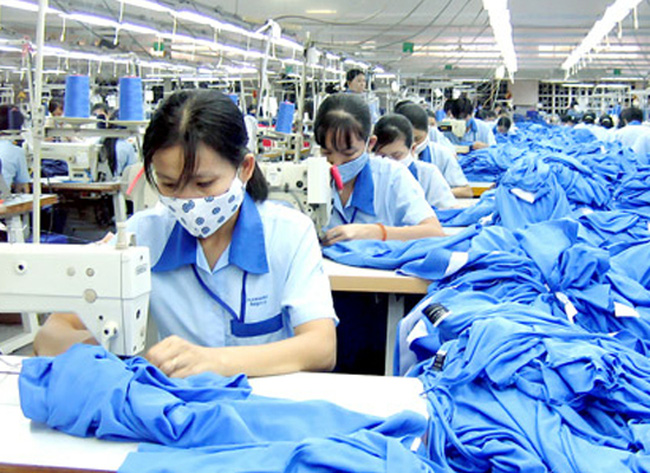
In total, all textile, garment and footwear-related export items from Viet Nam to the Europe–America market in the first half of 2025 reached USD 35.5 billion, an increase of 10.48% compared to the same period last year.
Many positive signals in textile, garment, footwear exports to the Europe–America region
Textile and garment export performance
Viet Nam’s textile and garment exports to the Europe–America region continued to record a positive growth trajectory. Total textile and garment export turnover to the world in the first half of 2025 reached USD 21.66 billion, up 10.48% compared to the same period in 2024 (USD 19.61 billion). Within this, exports to the Europe–America region accounted for 54.60% of total global turnover (compared with 52.07% in the same period of 2024), indicating that demand in these key markets remains stable and positive.
The United States remains Viet Nam’s largest textile and garment export market, with turnover reaching USD 8.79 billion, equivalent to 40.58% of Viet Nam’s total global textile and garment export value, up 17.02% compared to the same period in 2024 (USD 7.51 billion). Exports to the EU-27 reached USD 2.12 billion (accounting for 9.81%), up 15.69% over the same period in 2024 (USD 1.84 billion). The CPTPP group in the Europe–America region (including the United Kingdom, Canada, Mexico, Chile and Peru) reached USD 1.22 billion, up 10.82% year-on-year and currently accounts for 5.61% of Viet Nam’s total global textile and garment exports.
Within the EU-27, several key markets recorded positive growth: Spain was up 14.72% (reaching USD 293.48 million); the Netherlands increased 11.92% (USD 647.49 million). Exports to Belgium were almost flat (down slightly by 1.31% to USD 204.20 million). Some markets posted particularly strong positive growth: Sweden increased 73.02% (USD 76.61 million), and Denmark rose 10.97% (USD 31.34 million).
In the Europe–America CPTPP group, the United Kingdom reached USD 452.5 million (+22.98%), Canada USD 593.6 million (+2.23%), Mexico USD 104.1 million (+10.59%), Chile USD 51.2 million (+16.19%) and Peru USD 13.5 million (+42.65%).
Viewed by global regional structure, textile and garment exports to the Europe–America region currently account for 54.60% of Viet Nam’s total textile and garment exports, while exports to Asian–African markets account for 43.88%, down from 46.45% in the same period of 2024. This shows that while growth in Europe–America is outpacing the overall average, the share of Asia–Africa is correspondingly declining in the global consumption structure for Vietnamese textiles and garments.
Footwear and bag export performance
Viet Nam’s footwear and bag export picture in the first half of 2025 continues to reflect a clear recovery trend after the 2022–2023 period. The share of exports to the Europe–America region in Viet Nam’s total exports for these sectors is high, confirming the role of these core markets in the global supply chain: in the case of footwear alone, this region accounts for 73.43% of Viet Nam’s total global footwear export turnover, while for bags the figure is 74.11%.
Footwear of all kinds
Within the footwear category, the recovery momentum is evident across major markets. The United States continues to be the most important growth driver, with turnover reaching USD 4.35 billion, up 12.82% compared to the same period in 2024, thereby maintaining its position as the leading market. In the Americas, several emerging bright spots are adding positive momentum to exports: Brazil reached USD 115.0 million, up 33.78%, while Argentina reached USD 90.1 million, up 129.21%. Alongside this, the CPTPP bloc in the Europe–America region (including the United Kingdom) recorded double-digit growth, with turnover of USD 1.33 billion, up 22.90%; within this, the UK reached USD 541.31 million (up 12.24%), Canada USD 317.74 million (up 21.15%), Mexico USD 347.63 million (up 49.04%), Chile USD 81.50 million (up 17.50%) and Peru USD 46.62 million (up 19.70%).
In the EU-27, Viet Nam’s footwear exports increased steadily in line with the cycle, with total turnover reaching USD 2.64 billion, up 10.67% from USD 2.38 billion in the same period of 2024. Many key markets recorded clear improvements: the Netherlands reached USD 888.99 million (up 12.58%), Germany USD 379.55 million (up 2.42%) and Italy USD 287.26 million (up 53.09%). A number of markets maintained positive growth, such as Spain (USD 271.61 million, up 7.96%), Poland (USD 51.89 million, up 25.81%) and Sweden (USD 42.89 million, up 45.92%), while Belgium was almost flat (USD 628.37 million, up 0.32%).
Bags, wallets, suitcases, hats, umbrellas and parasols
For bags, wallets, suitcases, hats, umbrellas and parasols, growth was maintained at a fairly good level, although the level of dynamism was lower than for footwear. The United States recorded turnover of USD 938.73 million, up 17.87% from USD 796.40 million in the same period last year, and continues to account for a large share of Viet Nam’s total bag exports.
The EU-27 reached USD 433.85 million, up 7.82% compared to USD 402.37 million; within this, a number of key markets recorded double-digit growth, such as Germany (USD 98.94 million, up 17.03%), Italy (USD 47.39 million, up 9.31%) and Sweden (USD 14.70 million, up 12.61%), while the Netherlands rose 7.83% to USD 151.34 million. Some “soft spots” emerged in Belgium (USD 70.37 million, down 0.21%) and Spain (USD 32.39 million, down 7.14%), reflecting differentiation according to the retail structure and ordering cycle of each market.
Within the CPTPP group in the Europe–America region, total turnover of USD 171.32 million was up 1.08% compared to USD 169.49 million; performance was mixed, with the UK up 2.49% to USD 59.31 million, and Chile and Peru recording strong increases of 32.34% and 29.75% respectively, while Canada was almost flat (−0.21%) and Mexico fell 6.32%.
Taken together, the two product groups show that demand in Europe–America continues to play a pivotal role in Viet Nam’s footwear and bag exports. Solid recovery in the United States and steady growth in the EU-27, combined with positive effects from the CPTPP bloc, are helping Vietnamese enterprises diversify export destinations and improve the resilience of order flows. In a context where global capital costs and consumption remain volatile, the current market structure – with the U.S. as “locomotive”, the EU-27 as the foundation and the CPTPP “belt” – provides a favourable platform to sustain growth in subsequent quarters, while creating room for niche markets in Latin America to accelerate and support overall expansion.
3. Assessment and outlook
After the first half of 2025, Viet Nam’s textile, garment and footwear exports to the Europe–America region have continued to grow, but face an important policy “inflection point”: the U.S. countervailing tariff order, under which the applicable rate for Viet Nam is 20%, effective from 7 August 2025. This development has immediately reinforced the “accelerated delivery” trend that had already emerged since the first quarter, as buyers rushed to finalize schedules and request delivery before the policy threshold in order to optimize costs. According to leading enterprises, shipments loaded before 00:01 on 7 August and cleared customs before 00:01 on 5 October (U.S. time) still benefit from the old tariff rate, while some transshipment consignments risk facing additional duties of up to 40%. As a result, revenue already “booked” for the third quarter is broadly in line with plan; however, from the fourth quarter onwards, pricing structures and commercial terms will have to be renegotiated against the new tariff baseline, in a context where U.S. consumer demand may weaken due to concurrent increases in retail prices for related product categories.
The impact of countervailing tariffs does not occur in isolation but interacts with already tightened compliance constraints. The U.S. Uyghur Forced Labor Prevention Act (UFLPA) continues to be enforced strictly across the entire cotton–yarn–fabric chain; any “data gaps” in traceability documentation can lead to consignments being placed in storage or denied entry, erasing the price advantage that enterprises had just secured at the negotiating table. In other words, in the U.S. market, short-term relative tariff advantages can only be converted into sustainable competitive advantages if enterprises can demonstrate the integrity of origin data at the shipment level, from cotton sourcing and spinning through weaving–dyeing to finishing. In parallel, U.S. tariff measures applied to Chinese supply continue to serve as a “market filter”: they push orders out of China, creating “space” for Viet Nam, but at the same time raise the compliance bar for replacement suppliers.
In Europe, the “rules of the game” are shifting sharply from a focus on speed and cost to eco-design, circularity and data transparency. The EU Strategy for Sustainable and Circular Textiles sets a framework of criteria requiring products to be durable, repairable, recyclable and subject to chemical control; the Ecodesign for Sustainable Products Regulation (ESPR) brings with it the Digital Product Passport (DPP) for textiles, with phased implementation from around 2027; extended producer responsibility (EPR) mechanisms for textiles and the Packaging and Packaging Waste Regulation (PPWR) require enterprises to bear part of the product life-cycle costs, from collection to recycling. For Vietnamese exporters, this necessitates a “re-architecting” of products: materials with reliable life-cycle documentation, controlled chemicals, packaging optimized for recycling; and internal data capabilities strong enough to provide product-level information in the formats required by brands and regulators. The EU–Viet Nam Free Trade Agreement (EVFTA) remains an important tariff advantage, but can only be “unlocked” when rules of origin at the “from yarn”/“from fabric” level are met and when enterprises are prepared in terms of DPP-related data.
Against this backdrop, the sector’s opportunity–challenge picture is clearly two-sided. On the opportunity side, supply-chain shifts in the direction of “China+1” are ongoing, helping Viet Nam maintain its position as a preferred destination; free trade agreements such as EVFTA, CPTPP (Comprehensive and Progressive Agreement for Trans-Pacific Partnership) and UKVFTA (UK–Viet Nam Free Trade Agreement) continue to provide medium-term tariff support; and relatively stable cotton prices create a more predictable input cost base for the 2026 cycle. On the challenge side, U.S. countervailing tariffs may dampen consumption in certain price-sensitive segments; compliance risks under UFLPA make “origin management” costs a new fixed burden; green and circular standards in the EU require substantial upfront investment in environmental treatment, life-cycle impact measurement and data digitization; and the domestic localization rate for materials and accessories remains a bottleneck when set against rules-of-origin requirements in FTAs.
For enterprises, response strategies need to shift from “defending unit price – racing against schedule” to “protecting data – managing policy risk”. In the U.S. market, each contract should be accompanied by a “UFLPA-ready” documentation package in line with best practice: certification of safe cotton sources; a continuous chain-of-custody for yarn–fabric–finishing; and evidence of chemical control and labour conditions at upstream suppliers. Product categories at high risk of stringent traceability checks could be selectively shifted to lower-risk materials (e.g. recycled polyester, bio-based blends) to reduce dependence on cotton, while diversifying cotton sourcing points from trusted partners. In Europe, a “DPP-readiness” roadmap should begin immediately for core product lines: standardizing material lists in digital form (BOM), measuring life-cycle footprints (LCA), configuring packaging in line with PPWR and setting up data-sharing interfaces with customers. In terms of markets, enterprises should maintain diversification, but increase the share of technically demanding segments such as sportswear, workwear, sustainable materials for footwear and FOB/ODM service packages, to capture longer segments of the value chain and offset rising compliance costs.
At the systemic level, what enterprises need in order to “run faster” is sector-wide soft infrastructure. A shared compliance support centre providing template documentation and standard data structures for UFLPA, DPP and REACH (the EU’s Registration, Evaluation, Authorisation and Restriction of Chemicals Regulation) would help small and medium-sized enterprises narrow cost gaps. “Green” textile–dyeing–finishing clusters with centralized wastewater treatment infrastructure, renewable energy and preferential green credit mechanisms for deep investment are a necessary condition to raise localization rates and thereby fully leverage EVFTA/CPTPP/UKVFTA tariff preferences. Alongside this, an early-warning mechanism for trade remedies in key markets would enable enterprises to adjust product portfolios and market focus before risks turn into actual losses.
In summary, the U.S. countervailing tariff order is a test of the sector’s management resilience: it is both a short-term drag on selling prices and demand, and a filter that allows suppliers with strong compliance capabilities to move up to a higher competitive tier. FTA “doors” remain open, but only enterprises that “move with their data” will be able to cross the new threshold of standards. If origin traceability is treated as a core pillar, eco- and circular design as baseline standards, and the localization of clean materials and accessories as a strategic direction, Viet Nam’s textile, garment and footwear sector will not only cushion the impact of the 2025 “tariff shock” but also lay the foundation for a more sustainable growth cycle in the 2026–2030 period.
Việt Thành