Vietnam has only 5,000 enterprises actually participating in the global supply chain.
The whole country has nearly 1 million enterprises, but data from the General Statistics Office shows that only about 5,000 enterprises actually participate in the global supply chain, accounting for 0.001% of the total enterprises nationwide...
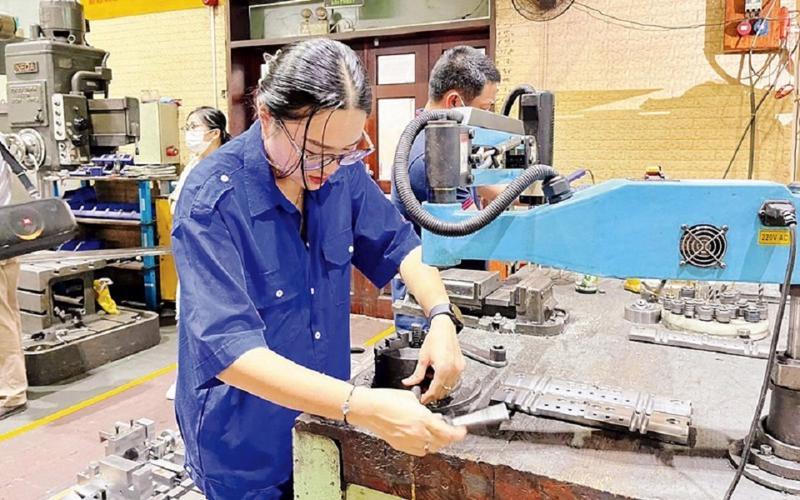 Most of Vietnam's industrial enterprises are still small and cannot participate deeply in the value chain. Illustrative photo.
Sharing at the business forum "Diversifying supply chains, developing markets, improving business adaptability" on the afternoon of June 26, Mr. Hoang Quang Phong, Vice President of the Vietnam Federation of Commerce and Industry (VCCI) said that although the supply chain has been gradually restructured, in reality, the majority of Vietnam's industrial enterprises are still small and cannot participate deeply in the value chain.
INSTITUTIONAL AND POLICY BOTTOM LINES
According to data from the Ministry of Industry and Trade, our country currently has about 2,000 enterprises producing spare parts and components, of which only about 300 enterprises participate in the supply chain.
Citing data from the General Statistics Office, Dr. Le Duy Binh, CEO of Economica Vietnam, said that out of nearly 1 million enterprises, only about 5,000 enterprises actually participate in the global supply chain, accounting for only 0.001%.
"And according to data from the Department of Industry under the Ministry of Industry and Trade, out of these 5,000 enterprises, only 100 are tier 1 suppliers. After nearly 40 years of business development, the rate of Vietnamese enterprises actually becoming part of the global supply chain is very low," said Dr. Binh.
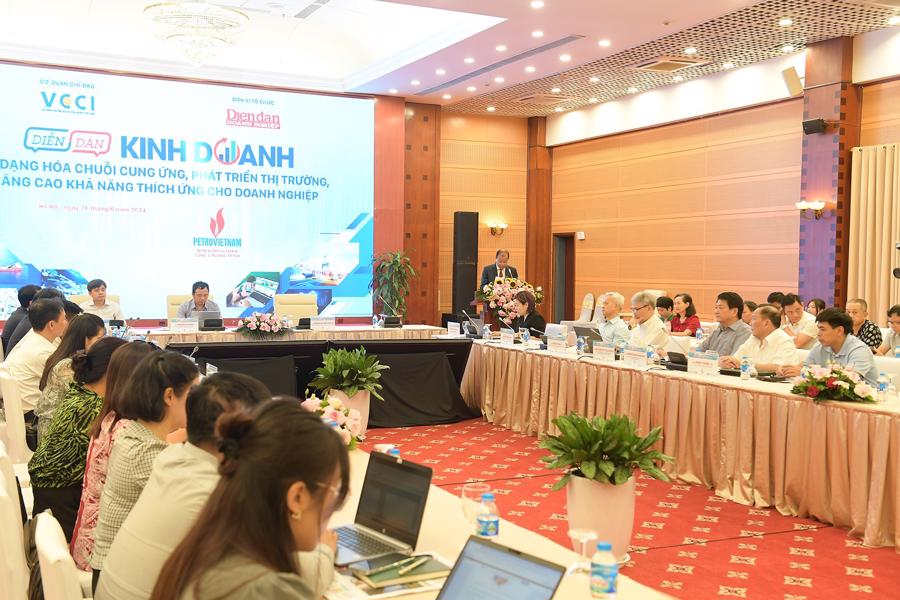
Analyzing the above “savings” figures, Dr. Binh said that Economica Vietnam’s research has pointed out some of the biggest difficulties that Vietnamese enterprises are facing when joining the global supply chain. That is meeting the extremely strict requirements, high requirements in terms of technology, management and delivery time of the leading enterprise in the chain.
"They require Vietnamese businesses to establish a technology system that meets requirements on products, business management, labor, and occupational safety and hygiene conditions. Not all businesses can meet these requirements," Dr. Binh stated the reality.
Another bottleneck is the increasing demand for green production from the international market, forcing other countries participating in the global supply chain to accelerate the greening of production.
To meet the above requirements, businesses must invest a lot, while investment requires a huge amount of capital and must continuously meet the requirements of the chain head.
Furthermore, to spend a large amount of capital, businesses must have great confidence in the business environment, that when they invest it will be safe, there will not be too many changes in policy mechanisms, and there will be no changes in legal regulations.
According to Dr. Nguyen Tu Anh, Director of the Center for Economic Information, Analysis and Forecasting under the Central Economic Committee, the biggest challenge when participating in the chain is that Vietnamese enterprises' human resources are still lacking skilled workers and unskilled workers.
In addition, there are challenges in connecting domestic enterprises and FDI enterprises. The requirements of FDI enterprises with local enterprises are stability and high quality. Domestic enterprises that want to participate and connect to the supply chain need to invest in people and technology.
In addition, Mr. Nguyen Van Hoi, Director of the Institute for Strategy and Policy Research of Industry and Trade under the Ministry of Industry and Trade, said that there are still difficulties in the process of implementing support policies, such as awareness, thinking, thinking, and vision of policy makers. Lack of transparency and equality, lack of stability, overlap, contradiction, and lack of coherence.
In addition, policies to promote growth model transformation are not effectively implemented. There are no separate mechanisms and policies to encourage the development of export logistics.
The production and export chain still faces difficulties according to current legal regulations. Awareness and capacity to implement export promotion policies from businesses are also limited.
INNOVATING THE APPROACH TO BUSINESS SUPPORT
In order for businesses to participate deeply in the global supply chain, according to Mr. Binh, it is necessary to perfect institutions and policies; administrative procedures, import-export procedures, and specialized inspections need to be reformed and improved more strongly to facilitate trade, thereby making joining the new global supply chain easier than before.
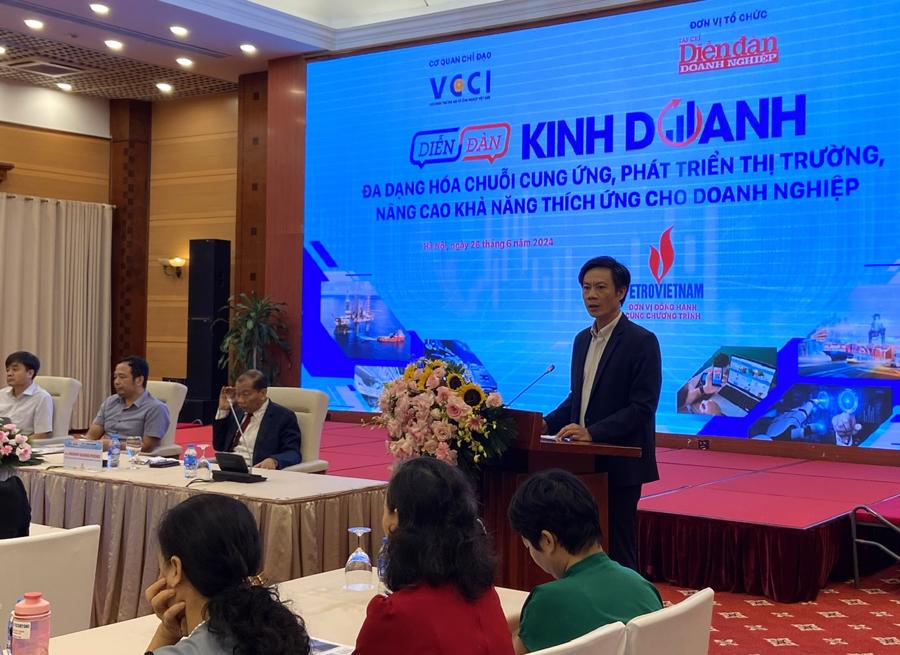 Mr. Le Duy Binh, CEO of Economica Vietnam: "Business support thinking needs to be innovated, ensuring more focused and targeted support for businesses."
In addition, there needs to be an ecosystem to support businesses when investing in the technology sector. They need research centers, laboratories, testing centers, etc. to meet ISO requirements and quality standards. Currently, ecosystems still do not have sufficient support for businesses, especially in industries with large capital needs such as renewable energy, green transportation, etc.
In addition, it is necessary to innovate the approach to supporting businesses. Mr. Binh said that among the current support policies of the State, very few of them have been effective. Innovation in institutions and legal regulations helps make the path to joining the supply chain more convenient and open. Therefore, the mindset of supporting businesses also needs to be innovated, ensuring more focused and targeted support for businesses.
Currently, when the economy shows signs of recovery and especially new opportunities begin to appear, there is a shift in the global supply chain, which requires businesses to improve their internal capacity, reach out to the international market and compete directly with foreign businesses according to market principles.
Economica Vietnam representative said that deeper integration into the global supply chain in the current context depends largely on the self-efforts of the business community.
However, this effort will be much more favorable and easier if the institutional conditions, business environment, and legal regulations are easier and more favorable for the self-efforts of enterprises.
Support policies need to focus on key areas with high added value, the future of the world and also the future of Vietnam's economy in the coming decade, such as semiconductor industry, chips, green energy, medicine, health care, etc.
In the current context, support policies must be in the direction of: returning space to the market through support measures. Many current support measures are in the direction of giving away, subsidizing, which is very necessary in the context of a difficult economy, however, at this time, this method needs to be adjusted.
Subsidy and support policies that have been in place for too long should also be gradually reduced in scale or intensity, so that the economy can operate according to the market mechanism and its inherent laws. From there, businesses must also follow the market rules, helping the market to allocate resources in the economy in a more optimal and effective way. This will also help businesses compete better.
Thuy Linh