The News
Finding New Pathways to Ensure Sustainable Export Growth
Speaking at the seminar “Market Diversification Strategy: From Risks to Opportunities” organized by the Ministry of Industry and Trade on September 5, 2025, businesses emphasized that diversifying markets and seeking new directions is essential to sustaining export growth.
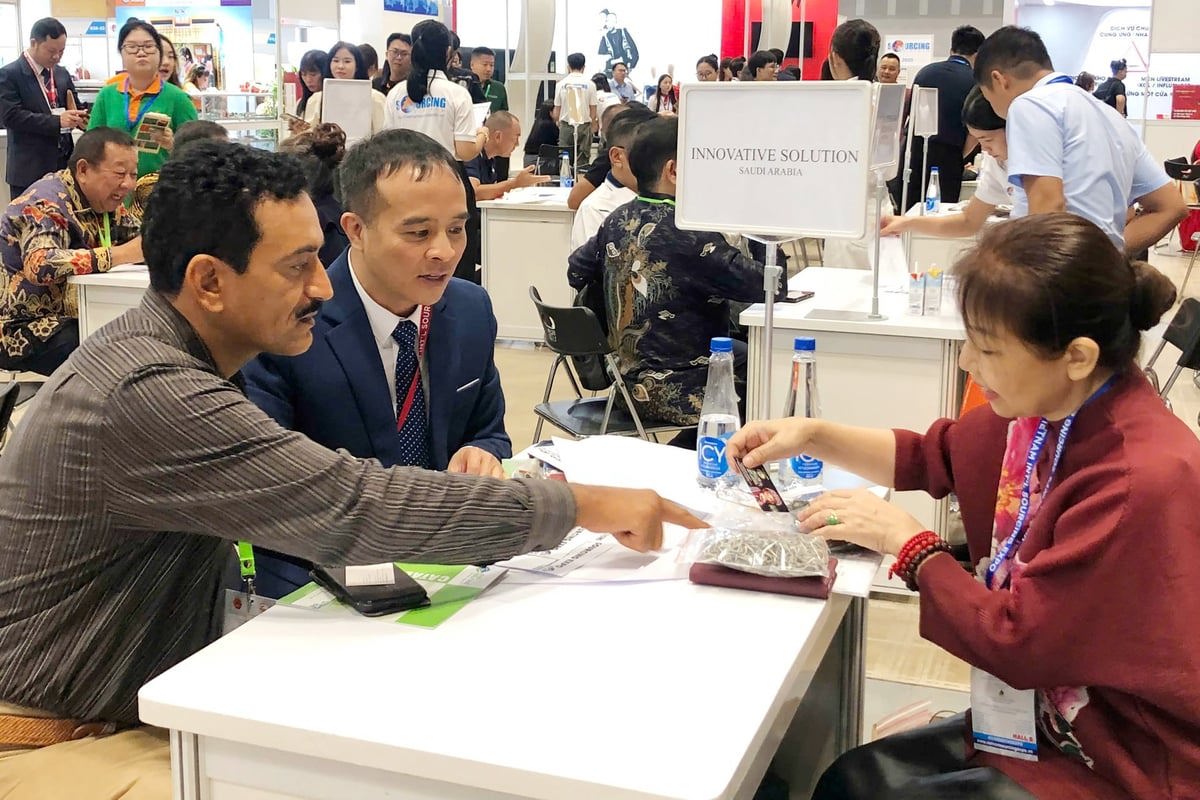
Many foreign businesses are exploring and connecting to purchase goods from Vietnamese enterprises.
According to the Ministry of Industry and Trade, in the context of strong global economic fluctuations, identifying new pathways to ensure sustainable development for Vietnam’s exports has become more urgent than ever.
Dependence on a limited number of traditional markets also presents numerous challenges, especially as trade barriers, geopolitical instability and protectionism continue to rise.
Market diversification is no longer just a slogan but has become a matter of survival for Vietnamese enterprises. Experts note that while the United States, the EU, China and South Korea remain key markets, tapping into under-explored regions such as Latin America, the Middle East, the Nordics or Canada will help businesses widen their growth margins, reduce risks and enhance competitiveness.
Mr. Tạ Hoàng Linh, Director General of the Department of Foreign Market Development under the Ministry of Industry and Trade, stated: “Vietnam’s exports need to stand on multiple pillars to reduce dependence on a few major markets. If we seize the opportunities, we can not only disperse risks but also elevate Vietnamese goods on the global trade map.”
Representatives of the Ministry of Industry and Trade stressed the importance of proactively identifying opportunities, leveraging new-generation free trade agreements (FTAs), and strengthening direct connections between Vietnamese enterprises and major global distributors and corporations. This is not only a macro-level orientation but also a concrete step to increase the global presence of Vietnamese goods.
From the business perspective, Mr. Huỳnh Lê Đại Thắng – Director of Nghĩa Sơn Furniture Co., Ltd. – said that Ho Chi Minh City currently has about 1,000 wood processing enterprises. Vietnam’s wood industry has achieved a notable position on the global export map but remains heavily dependent on the U.S. and EU markets. As a result, fluctuations in these markets severely affect Vietnamese businesses.
Exporting enterprises seek solutions to reduce costs.
“Diversification helps spread risks and explore new customer segments. We have experimented with orders to the Middle East and Canada, but still face many barriers such as technical standards and logistics,” Mr. Thắng shared.
Assessing promising markets for the wood industry, Mr. Mirash Basheer – Director of May Exports Vietnam under Lulu Group – said the Middle East is a highly potential market with strong and stable purchasing power. Products such as food, seafood, textiles and wooden furniture from Vietnam have significant room for growth. However, the prerequisite is Halal certification and long-term supply capacity. Middle Eastern consumers place great importance on trust, so businesses must establish credibility before expanding scale.
Providing market guidance for enterprises, Ms. Nguyễn Thảo Hiền – Deputy Director General of the Department of Foreign Market Development – noted that the Eurasian Economic Union (EAEU) is a strong market for Vietnamese exports, with export turnover rising consistently as 90% of tariff lines have been reduced to zero.
This is a major advantage at a time when tariff barriers in some markets are increasing again. “Vietnamese products such as textiles, agricultural goods and seafood are favored and highly valued in the EAEU. At present, Vietnamese enterprises have significant opportunities as some of Russia’s partners face considerable legal and trade restrictions,” Ms. Hiền emphasized.
For the Nordic region, Mr. Per Ljungblad – Natural Fiber Category Development Manager for IKEA Southeast Asia – said the growing demand for sustainable consumption is opening major opportunities for Vietnamese wood and furniture products. “Nordic consumers prefer minimalist designs, eco-friendly materials and transparent origin. These are strengths that Vietnam can build on, provided that businesses invest more in international environmental certifications and green supply chains,” he said.
According to Mr. Tạ Hoàng Linh, political conflict, shifting consumer behavior, protectionist measures and other factors are all affecting the operations of Vietnamese enterprises. Therefore, diversifying markets and supply chains is essential. The Ministry of Industry and Trade is also supporting businesses to adapt to export market requirements.
Hữu Hưng