The United States Expands the Use of Section 232 on “National Security” Grounds: The Wood Products Investigation and Its Strategic Implications for Viet Nam
The United States’ decision to initiate an investigation and impose tariffs under Section 232 of the Trade Expansion Act of 1974 on imports of wood and wood products marks an important turning point in the way it deploys trade defence instruments. Whereas in the past, Section 232 was primarily associated with steel, aluminium and a few sectors directly linked to defence, the extension of this tool to wood products – a category traditionally regarded as civilian, with a globally dispersed supply chain – shows that Washington is testing a new policy framework that links “national security” to civilian sectors, infrastructure and socio-economic life. In the context of Viet Nam’s deepening dependence on the US market, both in terms of merchandise trade and supply chains, this case is not simply an isolated trade dispute, but a “test case” for a broader tightening cycle that could directly affect many of Viet Nam’s key export industries.
From a strategic standpoint, Section 232 was originally designed as a special instrument allowing the United States to adopt import-restrictive measures if it determines that certain imports “threaten to impair national security”. Traditionally, invoking national security has been confined to sectors with clear links to defence capabilities, critical infrastructure or strategic technologies. However, by bringing wood and wood products into the scope of investigation, the US is deliberately stretching the boundaries of the “national security” concept, extending it to sectors with a high import share and a strong degree of reliance on foreign suppliers.
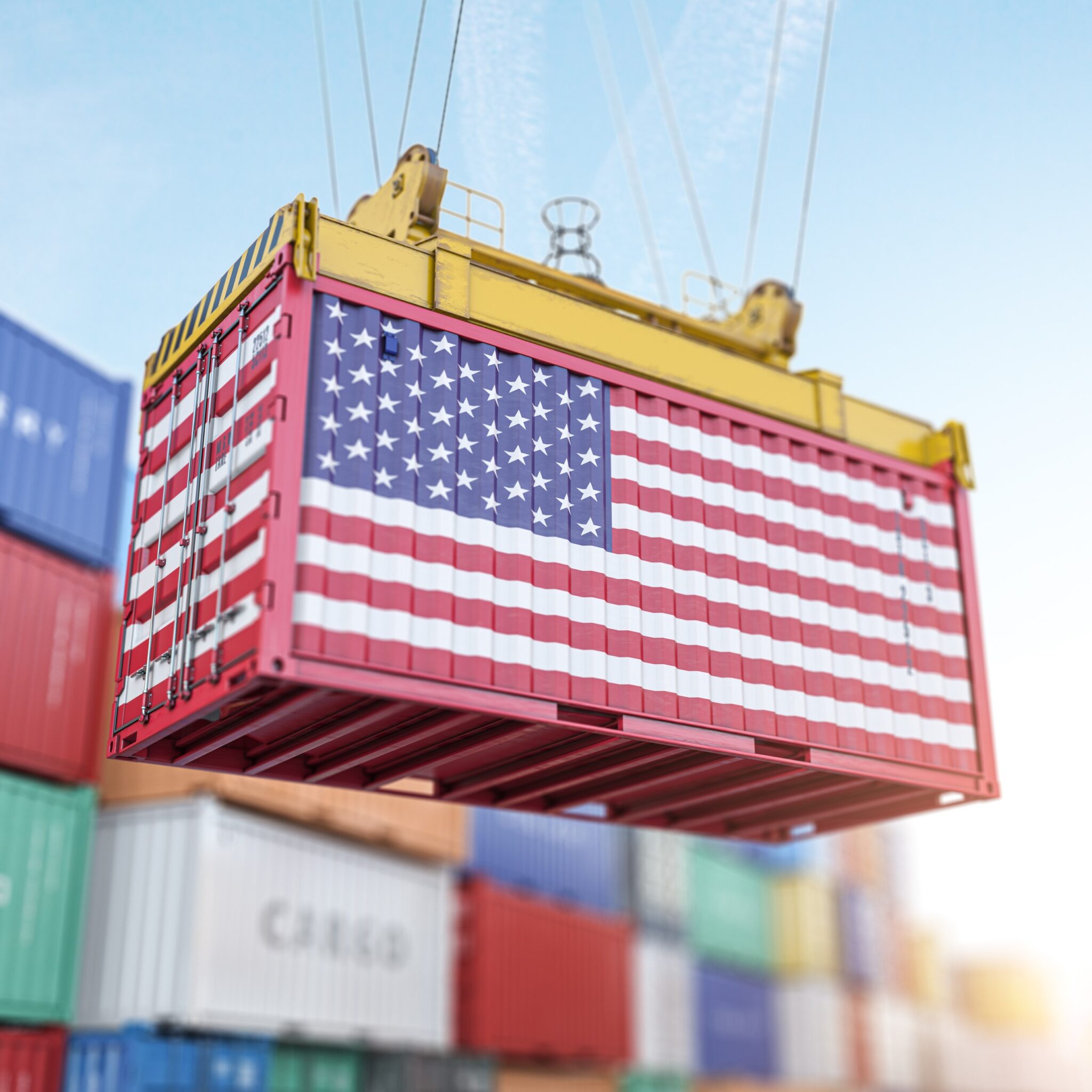
Wood has become an ideal “test case” for this approach because it brings together several favourable characteristics. First, wood is a basic material in the construction, furniture and civil infrastructure sectors, and can easily be linked to arguments about “civil and infrastructure security” in a context where the US is stepping up investment in infrastructure renewal, housing and public works. Second, the wood supply chain is highly globalised, involving dozens of exporting countries, which means the political response capacity of any single supplier country to a US tariff decision is relatively limited. Third, compared with steel, aluminium or semiconductors, wood is less commonly viewed as a “strategic industry” in international public opinion, so the application of Section 232 tariffs to this product group is likely to face weaker political and legal pushback.
From the perspective of US policy design, the investigation into wood products can therefore be seen as a “policy experiment”: using a less politically sensitive sector to test partners’ reactions, assess their tolerance threshold and create a precedent for applying an expanded “national security” rationale to other sectors – particularly those associated with infrastructure, technology and foundational materials.
Compared with traditional trade defence instruments such as anti-dumping (AD), countervailing duties (CVD) or investigations under Section 301, Section 232 poses a significantly higher level of risk for exporting countries. In AD/CVD cases, the US must demonstrate dumping or subsidisation and show that its domestic industry has suffered or is threatened with material injury. Section 301, for its part, remains framed as a trade–legal dispute, with a clearer path to challenge at the WTO. By contrast, Section 232 allows the US President to impose tariffs, quotas or other restrictive measures in a largely political decision, based on recommendations by the Department of Commerce, without having to prove specific injury.
In the case of wood products, the timeline underscores the “exceptional” nature of this instrument. Only a few months elapsed between initiation of the investigation in early 2025 and the decision to impose tariffs. A 25% tariff was applied immediately, with a roadmap for raising the rate to 40–50% from 1 January 2026. For Vietnamese enterprises, whose profit margins in the wood and furniture sector are typically in the range of 8–12%, such tariff levels not only erode profits but also push many contracts to the brink of cancellation or renegotiation on unfavourable terms, thereby triggering risks of cash-flow disruption, payment difficulties and broader financial stress.
The way in which the US has differentiated tariffs among partners also reveals a clear negotiating calculus. The European Union, Japan and the United Kingdom have been granted more flexible or partial exemptions, while a number of developing countries, including Viet Nam, face significantly higher rates. This reflects an intention to use Section 232 as a tool of selective pressure, creating space for bilateral bargaining based on relative interests.
It is also important to note that Section 232 does not operate in isolation but can be used as a “gateway measure”. Once tariffs have been imposed on national security grounds, the US can subsequently initiate AD/CVD or Section 301 investigations targeting the same product group or related products, thereby “locking in” protection over the longer term and making any rollback extremely difficult. With such a configuration, the wood case is very likely only the starting point in a broader sequence of measures.
For Viet Nam, the impact of this new development must be assessed in the context of its rising trade dependence on the US. The wood sector, especially furniture, has for many years been one of Viet Nam’s flagship export industries. By the end of August 2025, exports of furniture (HS 94) to the US alone had reached 9.33 billion USD, up 12.1% year-on-year. Notably, much of this growth in the first half of 2025 stemmed from “tariff-front-loading” behaviour by US importers, who rushed to place orders ahead of the entry into force of Section 232 tariffs, creating an “illusion of growth” that was never sustainable.
Once tariffs in the 25–50% range are fully implemented, demand for Vietnamese wood products in the US market is very likely to decline sharply. US importers and retailers will naturally seek to shift orders to suppliers benefiting from more favourable tariff treatment or less exposed to Section 232, such as Mexico (with geographical advantages and FTA ties with the US), certain EU member states, Malaysia or producers in South America. Once supply chains have relocated, the probability of Viet Nam regaining its lost market share in the medium term will be limited, particularly amid intensifying competition on price, logistics costs and increasingly stringent environmental requirements.
On the input side, the impact is no less serious. In the first eight months of 2025, the US exported about 0.50 billion USD of wood materials (HS 44) to Viet Nam, up 108.3%, while Viet Nam exported back to the US around 0.86 billion USD of wood and wood products in the same HS 44 category, an increase of 34.4%. This circular pattern indicates that bilateral trade in wood and wood products is not a simple one-way flow, but part of a two-way value chain. Raising tariffs at the final import stage will upset the balance of the entire chain: higher tariffs push up input costs, depress final demand, reduce capacity utilisation in processing, and transmit stress to supporting industries, potentially spilling over into local banking systems that are heavily exposed to wood-industry clusters.
The context is even more serious when Viet Nam’s growing trade dependence on the US is taken into account. By the end of October 2025, Viet Nam’s exports to the US had reached 126.2 billion USD, accounting for 32.3% of total national export turnover; the trade surplus amounted to 110.9 billion USD, making Viet Nam one of the three largest surplus countries vis-à-vis the US. With such a level of dependence, any shift in Washington’s trade policy – even if initially targeting a specific group such as wood products – carries the risk of systemic effects on Viet Nam’s production, employment and growth.
From a strategic vantage point, the Section 232 investigation into wood products should not be viewed in isolation, but rather as a precedent for a new policy pattern. Trade data for 2025 allow the identification of several Vietnamese export categories that share characteristics similar to wood: very rapid growth in exports to the US, a large share in Viet Nam’s export basket, and links to value chains that the US can readily connect to “national security” narratives.
Machinery and equipment (HS 84) stands out in this respect. Viet Nam’s exports in this category to the US doubled, from 17.8 billion USD to 35.6 billion USD in just the first eight months of 2025. This group is seen by the US as core to industrial capacity, manufacturing equipment, technological production lines and industrial infrastructure. Such a sudden surge from an emerging partner like Viet Nam inevitably raises questions within the US about dependency, particularly as Washington has previously used Section 301 and other tools to address similar concerns in its trade relationship with China.
Electronics and telecommunications equipment (HS 85) are also squarely in the high-risk zone. Exports in this category reached 36.7 billion USD over the same period, up 40.8%, making it Viet Nam’s largest product group in the US market. With only minor adjustments in policy argumentation, the US could readily claim that reliance on foreign sources for electronic equipment poses risks to digital infrastructure, cybersecurity and even defence-related industries.
Plastics and plastic products (HS 39), with exports of 2.85 billion USD and growth of 34.4%, as well as articles of iron and steel (HS 73), with exports of 1.02 billion USD and growth of 25.9%, are likewise basic materials tied to logistics, construction, consumer goods and infrastructure. All are areas that can be drawn into “supply chain security” narratives, especially given the US’s long history of intensive trade defence actions in steel and related sectors.
Taken together, these facts suggest that the Section 232 investigation into wood products has created a “policy template”: select sectors with large market shares in the US, embedded in the country’s infrastructure–technology–materials nexus, with significant import dependence, and invoke national security as the basis for Section 232 actions, subsequently paving the way for follow-on investigations. Given Viet Nam’s position as a fast-growing exporter in several major HS chapters, the country now lies within a high-risk zone and should treat this as a strategic warning, not only for the wood sector.
In terms of policy response, the first priority at the bilateral level is for Viet Nam to proactively engage the US in discussions on a reasonable “tariff ceiling” for wood and wood products, thereby limiting the risk of further tightening and preventing spillover to other product groups. In this process, it will be essential to formulate a package of commitments on traceability, prevention of origin circumvention, transparency of raw material sources, and compliance with environmental and labour standards, in order to alleviate US concerns.
Second, from a risk-management perspective, Viet Nam should establish an early-warning mechanism for high-risk HS groups, initially focusing on HS 84, 85, 39, 73 and other categories related to materials, infrastructure and technology. Such a mechanism must be based on continuous monitoring of US import data, policy developments at agencies such as the USTR and the Department of Commerce, as well as signals from US markets and industry associations. Integrating data analytics into this monitoring process would enable Vietnamese authorities to detect emerging “hot spots” at an early stage and to engage domestic businesses, industry associations and US counterparts before formal measures are adopted.
Third, over the longer term, the wood case should be regarded as a “wake-up call” to accelerate upgrading of domestic production chains, with a focus on increasing local content, standardising sustainability certifications, developing processing technologies and gradually shifting to products with higher technical content and value added. Only by reducing reliance on pure cost advantages and participating more deeply in higher value-added stages will Vietnamese enterprises be able to withstand policy shocks and secure a stronger bargaining position in future trade disputes.
Finally, at the level of overall strategy, the Section 232 investigation into wood has once again underscored the urgent need to diversify export markets and gradually reduce excessive dependence on any single partner. This does not mean scaling back economic ties with the US, but rather redesigning Viet Nam’s integration strategy so that it both maximises the opportunities in the US market and, at the same time, actively expands its economic space in other regions – from the EU and EFTA to MERCOSUR, the Middle East and Africa – in order to spread risk and enhance the resilience of the Vietnamese economy against future policy shocks that are difficult to predict.
Việt Thành