Events
SUPPORTING INDUSTRIES: A FOUNDATION FOR SUPPLY CHAIN RESTRUCTURING AND VIETNAM’S SUSTAINABLE GROWTH
Amid profound turbulence in the global economy, international supply chains are undergoing extensive restructuring. Successive shocks—from the pandemic, geopolitical conflicts, and strategic competition among major powers, coupled with rising protectionism—have exposed the vulnerabilities of highly fragmented production models heavily dependent on a few supply hubs. To adapt, many multinational corporations are shifting strategies from cost optimization to resilience optimization, accelerating supply-source diversification, adopting “China +1” production models, regionalizing supply chains, and placing greater emphasis on sustainability, ESG, and technological autonomy.
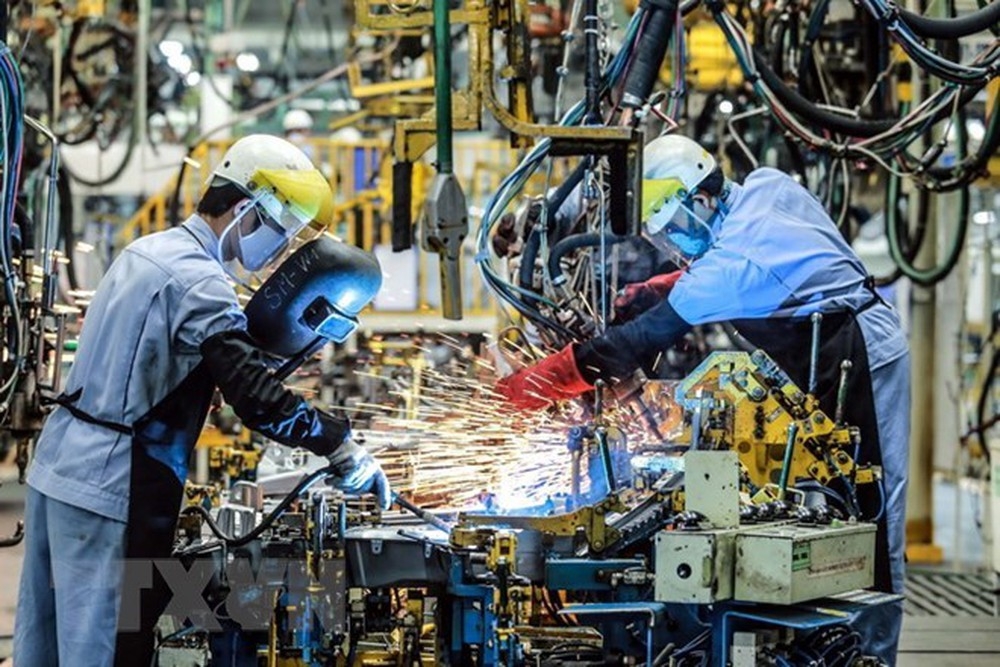
Within this context, supporting industries emerge as a strategic foundation that determines a country’s economic autonomy, its ability to integrate deeply into regional and global value chains, and the quality of long-term growth. For Vietnam, the strong development of supporting industries is not only essential for raising the localization rate and reducing reliance on imported components, but also a prerequisite for attracting high-quality investment, participating in higher value-added links of global production networks, and achieving rapid yet sustainable growth. Recognizing supporting industries as a “pillar industry” is therefore of strategic significance.
Supporting industries are understood as sectors producing components, parts, materials, and technical services that directly supply major manufacturing industries such as mechanics, automobiles, electronics, textiles, footwear, and energy. Their capacity reflects the industrial sophistication, technological autonomy, and depth of participation in global value chains of an economy. In Vietnam, after many years of being prioritized, supporting industries have made notable progress. An emerging ecosystem of hundreds of specialized enterprises in metal processing, plastics–rubber, and electronics has taken shape around Hà Nội, Đà Nẵng, and Ho Chi Minh City. Some firms already supply complex components to major brands in automotive, motorcycle, and electronics industries, mastering key technologies such as PCBA assembly, precision mold making, electrical-equipment production, transformers, and large steel structures.
In trade terms, exports of supporting-industry products have grown steadily in major markets including North America, Japan, ASEAN, and China. However, imports of components and parts continue to account for a large share of Vietnam’s import structure—particularly in computers and electronics, machinery, equipment, and spare parts. This illustrates both the rapid expansion of Vietnam’s industrial production capacity and the vast remaining potential for domestic supporting-industry development. In global supply chains, supporting industries determine localization rates, domestic value added, and the competitiveness of manufacturing industries; influence multinational corporations’ investment decisions; and form the foundation for innovation, enabling accumulation of design, engineering, standardization, and digital-production capabilities.
Recent years have seen global supply chains repeatedly disrupted. Production networks optimized solely for low cost and short-term efficiency have proved highly vulnerable. Consequently, multinational corporations are shifting from cost optimization to resilience optimization. They are diversifying production locations, reducing dependence on a few processing hubs, and favoring markets with political stability, broad FTA networks, and strong logistics infrastructure.
For Vietnam, this trend presents both opportunities and challenges. The country has emerged as an attractive destination for diversified production thanks to its labor advantages, geoeconomic location, deep integration, and extensive next-generation FTAs. Import–export turnover has surged, many processed-industrial sectors have achieved double-digit growth, and trade surpluses have reached record highs. Yet, these opportunities come with rising standards. Requirements for quality, cost, delivery, traceability, social responsibility, green production, and carbon neutrality are now mandatory. Multinationals are implementing stricter supply-chain risk-management programs, requiring suppliers at all tiers to meet globally unified standards. This forces Vietnamese supporting-industry enterprises to restructure and upgrade their technology, governance, and business models in a fundamental way to secure and maintain their position in new supply networks.
In this environment, supporting-industry capacity becomes a decisive factor in whether Vietnam can transition from an “assembly workshop” to a regional center of manufacturing and design. Without timely upgrading, domestic firms risk being pushed out of high-value chains and remaining stuck in low-margin, assembly-level segments vulnerable to external shocks.
Current assessments show that in mechanics and automotive industries, Vietnam has developed some firms capable of producing high-precision components, steel structures, and molds for OEMs in automotive, motorcycle, and heavy engineering sectors. Several domestic conglomerates have invested in large-scale mechanical complexes and specialized supporting-industry industrial parks, building relatively complete value chains and aiming to export industrial goods to multiple markets. Nevertheless, localization rates in the automotive sector remain low, and high-tech components are still overwhelmingly imported. Product-design, testing, and standardization capabilities at many firms remain limited, keeping tier-1 supplier status out of reach for most.
In electronics and electrical industries, Vietnam has become a major production base for many global corporations, and a number of domestic firms now manufacture circuit boards, electrical equipment, switchgear, transformers, and plastic–metal components. Many have mastered SMT and PCBA assembly lines and adopted international standards for quality and environmental management. Vietnam is also among the significant regional producers of solar-power batteries. Yet upstream value-chain activities remain heavily dependent on imported materials and components; high-value stages such as wafer, cell, chip, and sensor manufacturing have minimal domestic participation, limiting domestic value addition.
Việt Thành
In renewable energy, supporting industries have made initial strides. Domestic suppliers participate in wind-power projects by producing turbine foundations, towers, steel structures, and grid-connection systems; in solar projects, they provide mounting frames, cables, switchgear, and a portion of inverters and modules. Some mechanical–electrical firms have mastered transformer production and substation equipment. However, localization in wind and solar projects remains only a few dozen percent, with core high-tech equipment still imported. Certain market segments—such as medium- and large-scale hydropower and some coal-fired assets—are saturated, constraining demand for new domestic component-production investment.
Overall, despite significant progress, Vietnam’s supporting industries still lag behind global supply-chain requirements in technological depth, tier-1 supplier capability, and localization rates in key sectors.
Core challenges remain. First are limitations in technology, productivity, and materials. Most supporting-industry firms are SMEs with constrained resources, outdated technologies, and low productivity. Investment in modern equipment, automation, and digital manufacturing requires capital far beyond the means of many firms. Meanwhile, Vietnam’s materials industry is underdeveloped, forcing reliance on imported high-tech materials, increasing costs and vulnerability to price and supply shocks.
Second, sustainable industry linkages remain weak. Ecosystems connecting supporting-industry firms with assemblers, FDI manufacturers, and domestic anchor corporations are not yet fully formed. Many SMEs lack access to information on technical requirements, supplier-selection processes, and opportunities for trial orders. Industrial-cluster models—where firms share infrastructure, labs, testing services, and logistics platforms—exist only in isolated forms and have yet to expand into a nationwide network.
Third, testing, certification, and quality requirements pose significant obstacles. Meeting complex standards in automotive, electronics, aerospace, and energy requires not only suitable technologies but also strong quality-management, traceability, and supply-chain-risk capabilities. Vietnam still lacks sufficient internationally accredited labs and testing facilities, forcing firms to send samples abroad at high cost and longer lead times. Quality–cost–delivery gaps relative to major buyers remain substantial.
Fourth, market size and order volumes remain limited in certain sectors. Domestic demand is often insufficient to justify large-scale investment in component manufacturing. Local auto-assembly volumes, grid-equipment demand, and new hydropower/thermal-power project numbers are constrained. Meanwhile, domestic competition remains price-driven, yielding low margins and limiting reinvestment. The cycle of “small scale – low profit – difficult to reinvest – difficult to upgrade” persists.
Finally, rising sustainability and ESG standards impose new challenges. Global value-chain suppliers must comply with strict environmental, social, and governance requirements—GHG reduction, renewable-energy use, waste management, labor standards, and transparency. For SMEs, investing in clean technologies, environmental-management systems, and ESG certifications is costly, especially amid high capital costs and limited awareness.
In response, several major industrial centers have begun taking action. Ho Chi Minh City—Vietnam’s economic engine—has identified supporting industries as a key pillar for upgrading growth quality. Together with surrounding provinces such as Bình Dương and Bà Rịa–Vũng Tàu, the region is being shaped into an integrated corridor of industry–supporting industry–logistics. The city is improving mechanisms and policies to support supporting-industry firms, including land, credit, tax incentives, technology-upgrade support, and quality-standard programs, while strengthening inter-provincial linkages to create regional manufacturing ecosystems. Specialized supporting-industry clusters with R&D, testing, and certification infrastructure are being promoted to offer firms a full suite of services that enhance their capacity to meet multinational standards.
The city also supports technological upgrading and digital transformation, developing high-quality human resources through partnerships between firms, universities, research institutes, and training organizations. Pilot programs on technology transfer, ERP/MES system deployment, automation, and smart-factory models are encouraged. Trade and investment promotion events, specialized exhibitions, and supplier–buyer matchmaking programs are organized regularly, with ITPC as the focal point.
International experiences confirm that successful supporting-industry development must align with long-term industrialization strategies, consistent policies, and appropriate state intervention. Japan built a robust SME subcontractor system under laws protecting and supporting suppliers, ensuring fair bargaining power, preferential financing, and technology-upgrade assistance. South Korea integrated supporting industries with chaebol conglomerates but mandated spillovers to SMEs through requirements for domestic component sourcing and strategic investment in materials and parts industries, complemented by smart-factory programs. Singapore focused on high-tech sectors, attracting leading manufacturers and connecting them with domestic SMEs through industrial-upgrade, technology-transfer, and workforce-training programs aligned with a long-term manufacturing vision to 2030.
Based on domestic practice and international lessons, several policy implications emerge. First, Vietnam should develop selective and flexible localization roadmaps in key sectors such as mechanics, electronics, and renewable energy. Minimum localization thresholds for specific components and equipment can be defined based on realistic capability assessments, providing both pressure and market opportunities for domestic firms.
Second, R&D and technological-innovation support must be strengthened. Research, testing, and technology-transfer centers should be established in key regions under public–private partnership models linking firms with universities and research institutes. Partial subsidies for R&D, equipment for testing and certification, and tax incentives for R&D expenditures can encourage firms to invest more in technology.
Third, financial incentives must be accessible. Beyond current schemes, Vietnam should develop credit-guarantee mechanisms, venture funds, and preferential-loan packages dedicated to supporting-industry projects. Procedures must be simplified to ensure SMEs can benefit effectively.
Fourth, specialized supporting-industry clusters should be developed, anchored by leading domestic or foreign firms, and equipped with shared services such as labs, testing facilities, logistics centers, and vocational training. These clusters should be jointly developed by local governments, enterprises, and academic institutions.
Fifth, digital transformation and sustainability must be accelerated. National digital-manufacturing programs should guide enterprises in adopting ERP/MES systems and traceability platforms. Support for environmental, energy, and social-responsibility management systems aligned with global ESG standards will help firms meet emerging supply-chain requirements.
Finally, trade and investment promotion for supporting industries must be elevated. Regular sector-specific exhibitions with international buyers and investors, along with proactive attraction of strategic projects in supporting industries and materials manufacturing, will strengthen domestic supply chains.
The analysis shows that supporting industries in Vietnam are entering a pivotal phase. In a world of restructuring supply chains, supporting industries are not merely “auxiliary” but are the backbone that determines Vietnam’s localization rate, import dependence, domestic value creation, and ability to move up the value chain. Vietnam has made meaningful progress but continues to face structural challenges. International experience demonstrates that building a strong supporting-industry ecosystem requires a long-term strategy, consistent policies, appropriate state intervention, proactive enterprise participation, and close collaboration with universities, research institutes, and industry associations. If Vietnam leverages current restructuring trends and effectively implements new support policies, it can build robust supporting industries that elevate its position in global value chains and lay a solid foundation for fast, sustainable, and autonomous growth in the medium and long term.