Events
Four Years of UKVFTA Implementation: Vietnam’s Exports Surge with 10% Annual Growth
ChatGPT đã nói:
The utilization rate of preferential C/O certificates under the UKVFTA has risen sharply—from 17.2% in 2021 to 36.2% after more than four years. This rate is now even higher than that of the EVFTA (35%) and the CPTPP (around 10%).
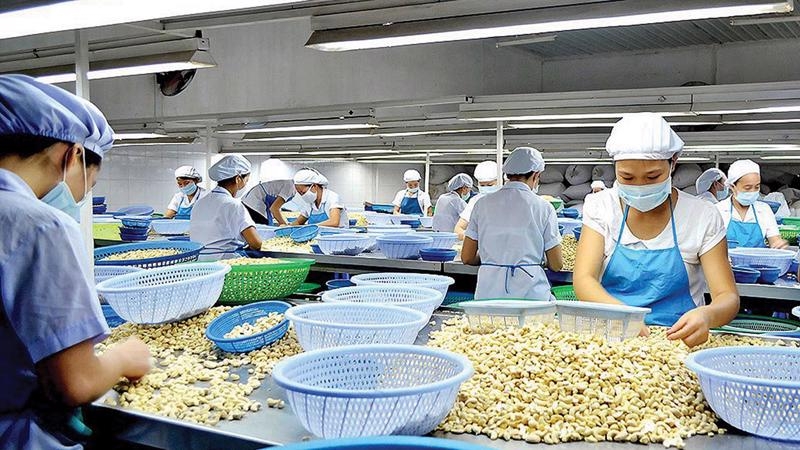
Shelled cashew nuts now account for nearly 90% of the UK market.
More than four years after the entry into force of the UK–Vietnam Free Trade Agreement (UKVFTA), bilateral trade has gained strong momentum, recording a compound annual growth rate (CAGR) of almost 10%. Vietnam has become the United Kingdom’s third-largest export partner in Europe, with many key product groups dominating the market.
At the seminar “Sustainable Development: The Key to Branding and Market Expansion in the United Kingdom”, Mr. Vũ Việt Thành, Senior Officer in charge of the UK market at the Department of Foreign Market Development, Ministry of Industry and Trade, emphasized that the UKVFTA—effective from 2021—has been a major catalyst for strengthening economic, trade, and investment cooperation between Vietnam and the UK. Its effectiveness has been clearly demonstrated through impressive growth figures, helping solidify the presence of Vietnamese products in one of the world’s most demanding markets.
According to VnEconomy, the UKVFTA has been crucial in enabling Vietnamese exports to gain deeper access, build a stronger market position, and sustain robust growth despite global export challenges.
Quantitatively, Vietnam’s average export growth to the UK during the first four years of implementation reached approximately 10% annually. Overall bilateral trade expanded at an average rate of 9.8% per year, with exports alone rising by about 10.5% annually—significantly higher than Vietnam’s export growth to the European Union.
In 2024, Vietnam’s exports to the UK reached a record USD 7.55 billion, up nearly 19% year-on-year. In the first nine months of 2025, bilateral trade reached USD 6.9 billion, an increase of 10.4%, while Vietnam’s trade surplus amounted to USD 5.5 billion, up 8.7%.
With this performance, the UK is now Vietnam’s third-largest export market in Europe. According to the UK Office for National Statistics, Vietnamese exports accounted for around 0.8% of the UK’s total imports in Q1 2025—a share significantly higher than that of Malaysia (0.29%), Singapore (0.48%), Thailand (0.53%), and Indonesia (0.22%).
Several major Vietnamese export groups are maintaining strong market shares thanks to UKVFTA tariff advantages:
Footwear accounts for around 26.6% of the UK import market for this category.
Pepper accounts for 55.7%.
Shelled cashew nuts hold nearly 90% of the market.
Rice exports have increased more than fourfold, from about USD 11 million in 2021 to the 2024 result.
On the other hand, the UK has strengths in high-tech goods, pharmaceuticals, and input materials for Vietnam’s manufacturing industries. The rise in Vietnam’s imports from the UK, especially in 2024–2025, reflects the sustainability and balance of bilateral trade.
Data from the UK Office for National Statistics show that UK exports to Vietnam in the four cumulative quarters (Q2–Q4 2024 and Q1 2025) reached GBP 1.5 billion, up 23.2% from the previous four-quarter period. Notably, pharmaceutical exports—an area where both sides have matching demand and supply—grew by nearly 60%.
Another area of strong growth is UK services exports to Vietnam. Mr. Thành highlighted that services such as finance, banking, insurance, education, healthcare, and business consulting recorded average growth of about 10% per year in the latest four-quarter period.
In terms of investment, the UKVFTA has also contributed to a more favorable business environment, attracting high-quality capital. After more than four years of implementation, the number of UK FDI projects in Vietnam has nearly doubled, rising from 380 to 607 projects, while total registered investment increased from USD 3.7 billion to USD 4.7 billion.
“These trends—growing services trade and rising imports of high-tech UK products—are creating a stable foundation for bilateral trade to continue taking off in the years ahead,” Mr. Thành noted.
He also highlighted the remarkable improvement in the utilization of UKVFTA tariff preferences. The preferential C/O utilization rate has grown rapidly from 17.2% in 2021 to 36.2% after more than four years—higher than both EVFTA (35%) and CPTPP (around 10%)—showing that Vietnamese enterprises are actively maximizing the agreement’s benefits.
Most importantly, he observed that Vietnamese exporters to the UK have become significantly more mature after four years. Businesses now adopt more structured market-entry strategies, comply much better with green rules, sustainability standards, extended producer responsibility (EPR), and supply-chain traceability requirements—areas that were much more challenging four years ago.
Other news