The News
Green Logistics – A Sustainable Development Trend for Export Businesses
On the morning of September 5, in Ho Chi Minh City, a thematic workshop titled “Green Logistics – A Sustainable Development Trend for Vietnamese Export Enterprises” took place.
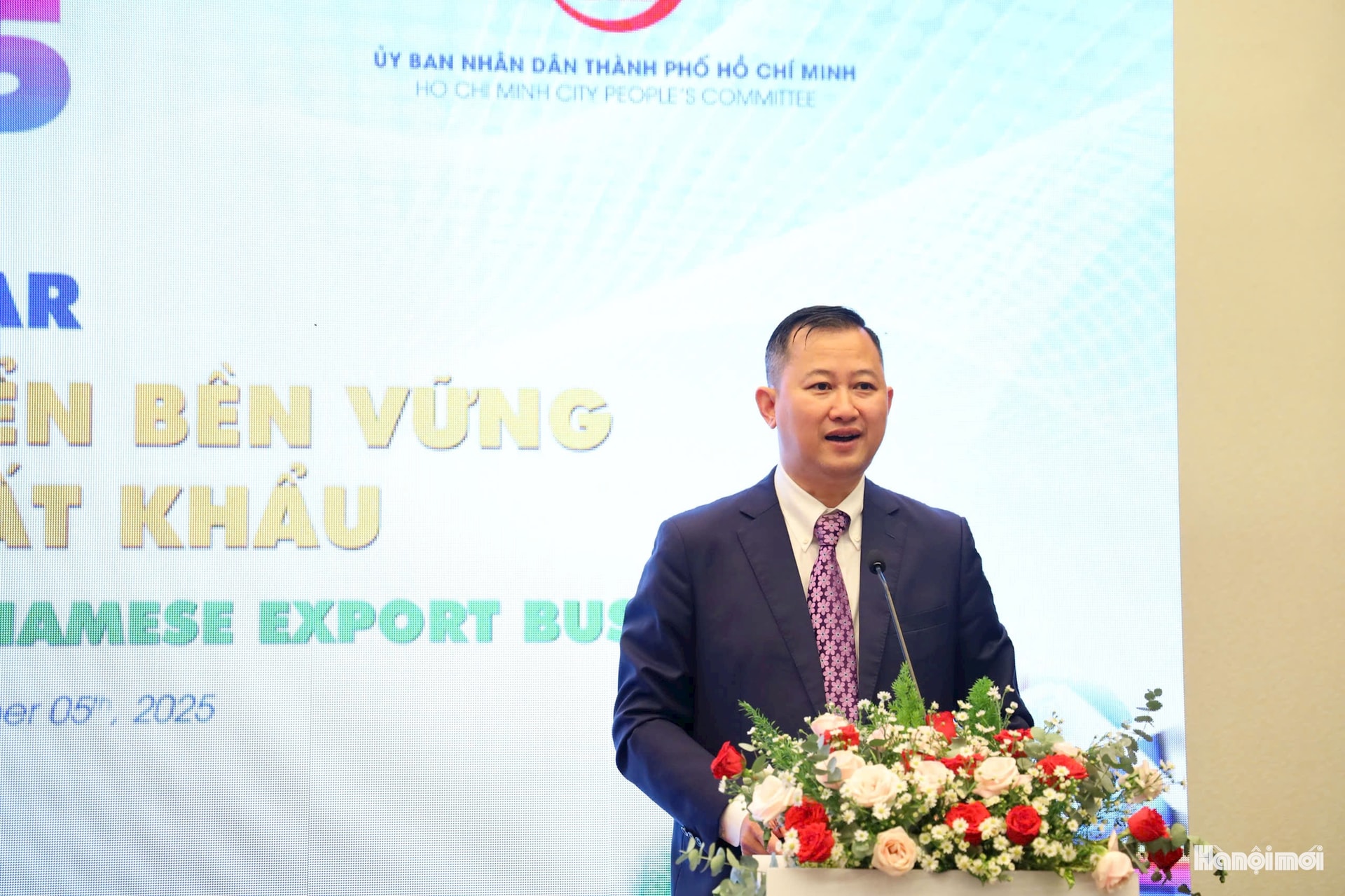
Mr. Trần Phú Lữ – Director of ITPC – delivers remarks. Photo: H. Phạm
The event was co-organized by the Department of Foreign Market Development (Ministry of Industry and Trade) and the Ho Chi Minh City Investment and Trade Promotion Center (ITPC).
In his opening remarks, Mr. Trần Phú Lữ – Director of ITPC – emphasized that when enterprises integrate green logistics into their business strategies, they will, in the long term, expand their customer base, increase revenue, reduce costs, and enhance competitiveness.
To develop green logistics, according to Mr. Lữ, businesses need to improve transport quality by replacing outdated vehicles with newer, environmentally friendly ones; optimize warehousing through the use of GPS technologies for information management and positioning; and strengthen the development of cold-chain technologies in warehouse operations.
He stressed that the Government must develop effective policy mechanisms to support local logistics services in line with each locality’s socio-economic characteristics, enabling small and medium-sized enterprises to better access domestic and international capital sources, expand markets, receive training, and access information.
Meanwhile, Mr. Trương Tấn Lộc – Vice Chairman of the Ho Chi Minh City Logistics Association (HLA) – noted that although Việt Nam has ranked 43rd out of 139 countries in the Logistics Performance Index (LPI), it still faces long-standing weaknesses in infrastructure quality and service capacity, resulting in unnecessary waste and carbon emissions.
Analyzing international barriers, Mr. Lộc highlighted growing pressure from the European Union (EU), which is establishing new regulatory frameworks. Specifically, the Carbon Border Adjustment Mechanism (CBAM) will take full effect in 2026, acting as a form of carbon tax imposed on goods imported into the EU. Exporters will be required to purchase and submit “CBAM certificates” corresponding to the carbon emissions embedded in their products.
Overview of the workshop. Photo: H. Phạm
He emphasized that the biggest challenge at present is the heavy reliance on road transport and numerous shortcomings in logistics infrastructure connectivity. To address this issue, the Ho Chi Minh City Logistics Association proposed a series of strategic recommendations. First, a unified national set of criteria for measuring green logistics should be developed.
In terms of finance, breakthrough green-finance policies are needed to ease the burden of initial investment costs for businesses, especially small and medium-sized enterprises.
Regarding infrastructure, HLA recommends that the Government accelerate key logistics infrastructure projects, giving priority to locations capable of connecting multimodal transport in order to reduce pressure on road transport.
On human resources, delegates underscored the importance of reforming training programs through a tripartite cooperation model: Government (Ministry of Education and Training, Ministry of Industry and Trade) – Academia (universities and colleges offering logistics programs) – Business (through associations such as VLA and HLA).
At the workshop, Mr. Bùi Tuấn Hải – Deputy Director of Customs Sub-Department Region II – said that toward the goal of building a “Digital Customs, Smart Customs” system by 2030, the Customs Sub-Department Region II will actively integrate technologies of the Fourth Industrial Revolution such as artificial intelligence (AI), big data, and blockchain into its operations.
To fully leverage the benefits of the digital ecosystem, Mr. Hải stressed that enterprises must proactively update legal regulations that frequently change to avoid errors and penalties. He emphasized the importance of preparing accurate documents from the outset, as even minor errors can lead to immediate rejection of declarations in a digital environment.
Moreover, businesses must focus on training personnel to ensure they possess the knowledge and skills required to operate modern electronic systems effectively. Finally, maintaining close coordination and proactive communication with customs authorities when issues arise will help ensure swift resolution and foster a reliable partnership.
In recent years, Việt Nam’s logistics sector has made notable progress, with an average annual growth rate of 14–16%. Việt Nam’s Logistics Performance Index has risen to 43rd out of 139 globally and 5th within ASEAN. The logistics market is currently valued at around 45–50 billion USD.
Hữu Hưng