The News
Export Businesses Seek New Buyers Through Proactive Trade Promotion
Vietnamese exporters are shifting toward a proactive approach—moving from isolated trade promotion to integrated ecosystem connection—aiming to capitalize on business opportunities arising from VIS 2025.
As global supply chains are reshaped by green standards and digital transformation, the critical question is no longer “what can we sell,” but “where do we position ourselves in the international distribution network.” Vietnamese businesses have chosen a proactive route: transitioning from one-off promotion to ecosystem connectivity, from short-term transactions to establishing long-term standards as an emerging supply hub in Asia.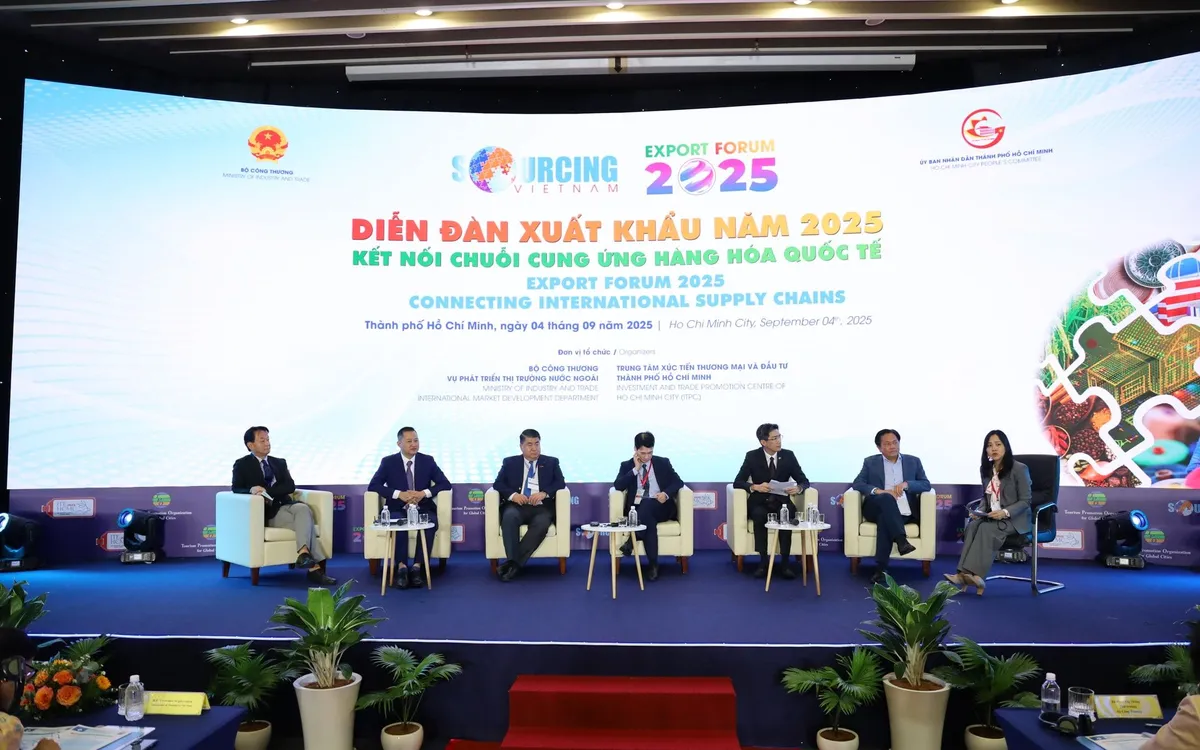
Positive signals from the connectivity forum
Speaking at the series of events “Vietnam International Sourcing (VIS 2025) – Connecting Global Supply Chains” and the Ho Chi Minh City Export Forum, held in conjunction with the Ho Chi Minh City International Travel Expo 2025 (ITE HCMC 2025), Deputy Minister of Industry and Trade Phan Thị Thắng emphasized that the event gathered 450 buyer delegations from 60 countries and territories, over 400 Vietnamese enterprises, 12,000 displayed products across 10,000 square meters, and 60 Trade Offices and Trade Office branches from around the world. These figures provide not only a foundation for businesses to seek trading opportunities but also reflect the essential conditions for Vietnamese goods to enter the “inner circle” of global distribution channels: product standardization, data standardization, and standardized environmental and social responsibility.
Rather than waiting for businesses to search for opportunities abroad, Vietnam has “brought in” international buyers through specialized B2B programs.
VIS 2025 unfolds amid rising protectionism, technical barriers, and stricter carbon transparency requirements. Yet these heightened standards are becoming a catalyst for production hubs capable of compliance to rise. For the first time, central and local authorities—led by Ho Chi Minh City—are working in unison to simultaneously promote tourism and connect global production and distribution, placing Vietnamese enterprises directly in the flow of real supply and demand.
The synergy is even clearer as VIS 2025 runs alongside ITE HCMC 2025. Minister of Culture, Sports and Tourism Nguyễn Văn Hùng highlighted that after 18 successful editions, the expo has expanded significantly, expected to welcome around 28,000 trade visitors, facilitate 12,600 business appointments, and gather representatives from 30 countries and territories, 520 commercial exhibitors, and 28 out of 34 localities. According to the Minister, tourism is not only a composite economic sector but also a bridge for external relations—turning each visitor into a “trade ambassador” who helps open new markets for Vietnamese goods. When trade, investment, and tourism are interconnected, the ability to secure contracts no longer depends on a few days of exhibition but extends through experience trips, on-site factory evaluations, and supply-chain inspections.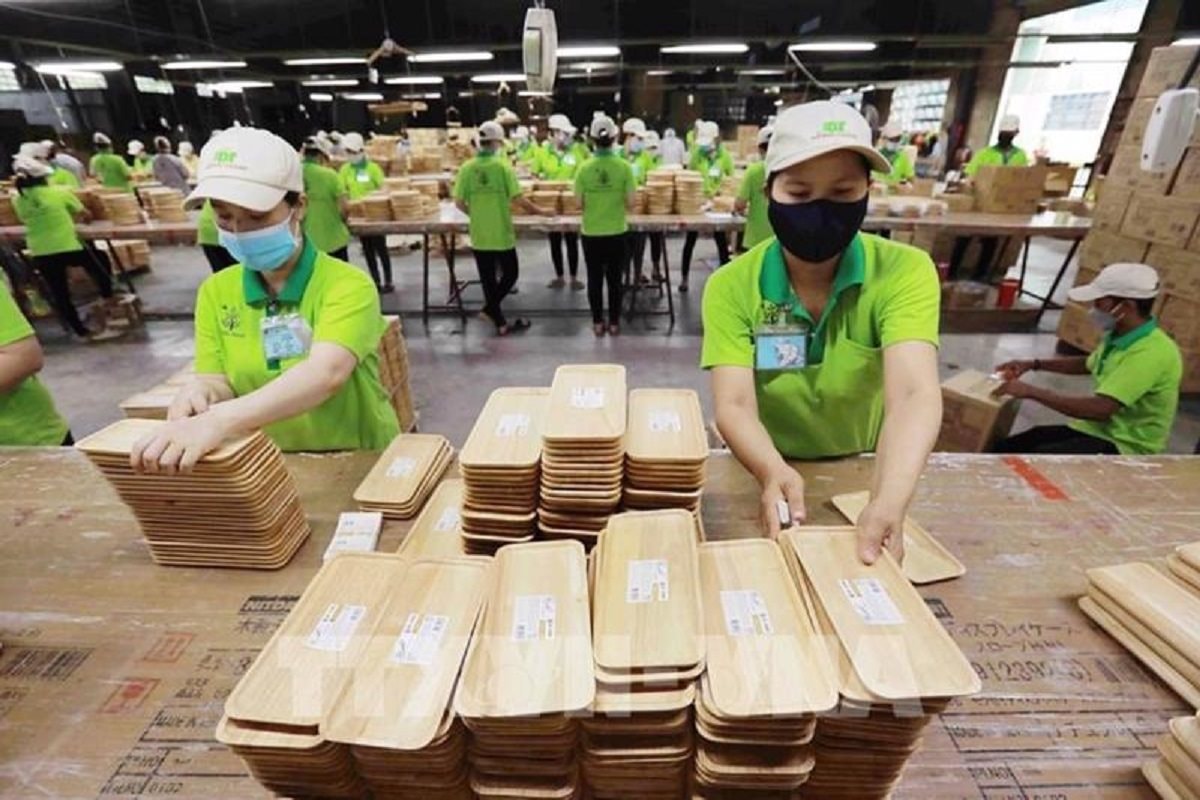
Ho Chi Minh City’s leading role is being further leveraged. Vice Chairman of the Ho Chi Minh City People’s Committee Võ Văn Dũng stated that after its administrative merger, the new Ho Chi Minh City covers 6,772 km² with a population of over 14 million, contributing about 23% of Vietnam’s GDP, accounting for 22.8% of national import–export turnover, over VND 1.6 quadrillion in retail and service revenue, and roughly 25% of the country’s tourism revenue. With this new structure, the city aims to become a multi-center megacity where finance, high technology, advanced manufacturing, and marine economy and logistics are developed to support supply clusters aligned with green and digital standards. This forms the necessary “institutional infrastructure” to connect domestic enterprises with global retailers, importers, and cross-border e-commerce platforms.
Instead of waiting for businesses to look outward, Vietnam—through this forum—has brought international buyers directly to them via specialized B2B programs, featuring over 3,000 pre-arranged meetings and about 5,000 free-form business connections at booths.
How to turn opportunities into real advantage?
To convert opportunities into positioning power, experts believe businesses must overcome four bottlenecks: standards, cost, productivity, and data. At the institutional level, this series of events is a practical implementation of the Government’s Scheme “Promoting Vietnamese enterprises’ direct participation in foreign distribution networks by 2030,” under Decision No. 1415/QĐ-TTg dated 14 November 2022. With clear focal points, market data, compliance requirements, and certification roadmaps can be consolidated into standardized toolkits, helping SMEs shorten the time needed to “get it right from the start.”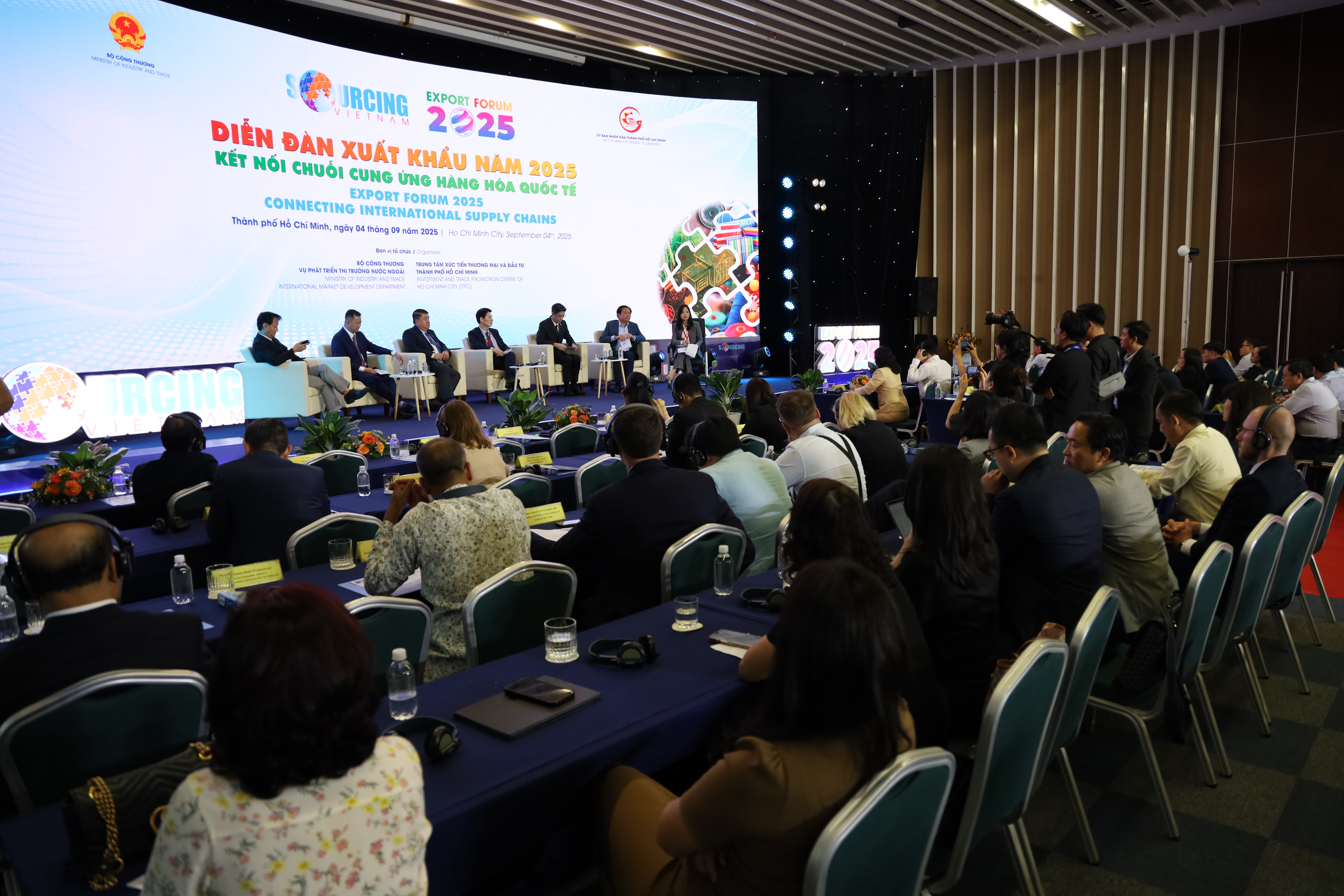
The forum also helps build production and supply chains directly in Vietnam for international buyers.
Specifically, Mr. Tạ Hoàng Linh, Director General of the Foreign Market Development Department (Ministry of Industry and Trade), noted that Vietnam continues to attract investors thanks to its strategic location, political stability, competitive labor costs, and 17 FTAs with over 60 countries—facilitating supply-chain diversification and mitigating tariff risks. Export growth, stable FDI flows, and strong interest from global corporations—particularly U.S. companies—affirm that Vietnam is becoming a manufacturing hub and strategic partner in global supply chains.
At the operational level, businesses must shift from passive “display and wait” promotion to proactively “scheduling” meetings with partners. VIS 2025 is where Vietnamese enterprises can begin this shift. First, by forming cluster-based supply chains to consolidate orders, share testing capacity, and standardize inputs and outputs. Second, by strengthening order-fulfillment infrastructure and smart logistics—especially for agriculture and processed foods, where time and storage conditions determine spoilage rates. Third, by leveraging tourism and investment to shorten supplier-evaluation cycles, turning “visitors” into “annual buyers.”
Deputy Minister Phan Thị Thắng affirmed that this series of events promotes both tourism and Vietnamese products and enterprises, while opening investment opportunities and enabling international buyers to build production and supply chains directly in Vietnam. “The new feature of the expo,” she said, lies in providing a space for solutions to boost international tourism alongside diverse trade products and a high-level forum on green and digital transformation—aligning with the Government’s target of attracting 22 million international visitors. The event also demonstrates Ho Chi Minh City’s commitment to creating the most favorable environment for domestic and international businesses to grow, building a green, sustainable, and innovative ecosystem for trade and tourism.
Hữu Hưng