The News
Experts Identify Key Infrastructure Bottlenecks: Why Road Transport Still Bears the Bulk of Vietnam’s Logistics Load
Despite clear improvements in infrastructure and services in recent years, Vietnam’s logistics industry continues to face a persistent paradox: the bulk of import–export cargo still depends on road transport — the most expensive and carbon-intensive mode of transportation. As a result, Vietnam’s logistics costs remain high, equivalent to 16–17% of GDP, undermining the competitiveness of domestic enterprises.
At the seminar “Green Logistics – Sustainable Development Trends for Vietnamese Export Enterprises” held on the morning of September 5, Trương Tấn Lộc, Vice Chairman of the Ho Chi Minh City Logistics Association (HLA), noted that Vietnam has climbed to 43rd out of 139 countries in the Logistics Performance Index (LPI). However, long-standing bottlenecks in infrastructure and service quality continue to inflate transport costs and generate substantial carbon emissions.
“We are paying the price for our excessive dependence on road transport. Multimodal transportation remains fragmented; railways and inland waterways have yet to demonstrate their full capacity. This not only keeps logistics costs at 16–17% of GDP but also prolongs delivery times and weakens competitiveness,” Lộc emphasized.
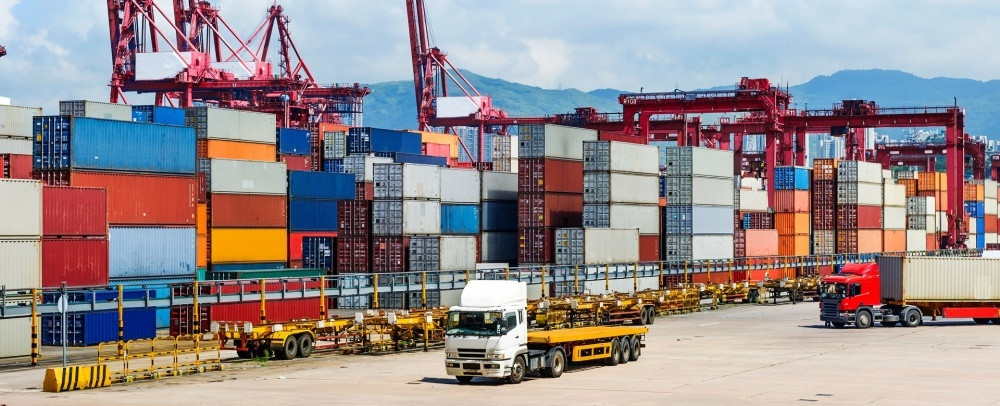
According to HLA, the core issue lies in insufficient connectivity across transport infrastructure. Although Vietnam has heavily invested in its expressway network, seaports, warehouses, railways, and waterways are not effectively integrated, causing cargo congestion at key transit points. Lộc warned that without accelerating multimodal connectivity, road transport will continue to shoulder the lion’s share of goods movement — keeping logistics costs high and undermining efforts to “green” supply chains.
To address these challenges, HLA recommends establishing a unified national set of green-logistics criteria as a basis for evaluating service quality; introducing breakthrough green-finance mechanisms to reduce the burden of upfront investment costs, especially for SMEs; expediting major logistics infrastructure projects that enhance multimodal connectivity; developing a shared logistics data ecosystem for the Southern Key Economic Region; and reforming human-resource training under a “three-party” model involving the State, educational institutions, and enterprises.
Beyond domestic constraints, Vietnam’s logistics sector is also under pressure from new international “rules of the game.” Beginning in 2026, the EU’s Carbon Border Adjustment Mechanism (CBAM) will take effect, requiring exporters to purchase carbon certificates corresponding to their emissions. Meanwhile, the EU Corporate Sustainability Due Diligence Directive (CSDDD) will obligate companies to monitor environmental impacts across entire supply chains — from raw materials to transportation and distribution.
“These regulations are redefining carbon pricing globally. Green logistics is no longer a matter of corporate social responsibility — it is a mandatory prerequisite for accessing export markets,” Lộc cautioned.
Despite these looming challenges, several domestic logistics enterprises are already making meaningful progress. At the Cát Lái Terminal, full digitalization of procedures through the ePort system has reduced cargo handling time from several hours to just 15–20 minutes, saving USD 1.5–2 million in fuel costs annually and significantly cutting CO₂ emissions through the use of electric cranes. The adoption of artificial intelligence (AI) to optimize transport routes has also yielded notable results, reducing fuel consumption by 15% and delivery time by 25%.
From the regulatory standpoint, Bùi Tuấn Hải, Deputy Director of Customs Sub-Department No. II, stated that Vietnam Customs is accelerating comprehensive digital transformation to keep pace with global trade. Citing international examples, he noted that AI-driven customs data analysis in The Bahamas has helped identify and recover over USD 115 million in tax fraud since 2020. Global studies similarly show that AI can reduce logistics costs by 15%, improve inventory levels by 35%, and boost customer service quality by 65%.
However, Hải also warned that digital transformation comes with stricter requirements for data accuracy and procedural compliance. “In a digital environment, a single error in documentation can lead to immediate rejection of a declaration. Businesses cannot remain passive; they must proactively update regulations, prepare accurate datasets, and equip their workforce with strong digital skills,” he stressed.
Overall, experts agree that lowering logistics costs and meeting green-transition requirements will require more than simply expanding the road network. Vietnam needs a comprehensive strategy built on multimodal connectivity, synchronized infrastructure, and deep digital transformation. Without promptly removing current infrastructure bottlenecks, road transport will continue to bear the majority of logistics activities, costs will remain high, and opportunities for Vietnamese enterprises to break through in global trade will narrow.
Huu Hung